Introduction to How CIPA Works
Superhero gifts come in all shapes and sizes, identifying their owners as someone apart. A girl on an episode of "Grey's Anatomy" thought she was a superhero because she felt no pain. You could kick her, pinch her, scrape her, burn her -- she wouldn't flinch. But she wasn't a superhero. She had a rare disorder called congenital insensitivity to pain.
People with CIPA can't feel pain, but they can feel touch and pressure.
|
Congenital insensitivity to pain and congenital insensitivity to pain with anhidrosis (CIPA) are part of a family of disorders called HSAN, which stands for hereditary sensory and autonomic neuropathy. We'll discuss HSAN more later, but basically, people with an HSAN disorder have trouble perceiving pain and temperature.
People with congenital insensitivity to pain and CIPA have a severe loss of sensory perception. They can feel pressure, but not pain, so they are likely to injure or mutilate themselves without meaning to. They might know they slammed their hand in the door, it just doesn't hurt. This inability to feel physical pain does not extend to emotional pain -- people with CIPA feel emotional pain just like anyone else.
In this article, we'll discuss what CIPA is and what it's like to grow up with CIPA. We'll also talk about how people with CIPA cope with the disorder in their daily lives.
If one concentrates on pain, the perception of that pain will increase. If one distracts thoughts away from the pain, the perception of the pain lessens. Learn about this amazing study involving brain control in this video from ScienCentral. |
Growing Up with CIPA
Children learn not to touch something hot the first time they get burned. They cry when they scrape their knees. But a child with congenital insensitivity to pain is different. Many parents discover their child has an insensitivity to pain when an accident happens that should make the child cry, but doesn't.
After parents notice all kinds of bumps and bruises that don't faze the child, they try to figure out what's wrong. Because congenital insensitivity to pain and CIPA are so rare, it might be difficult to get a diagnosis at first.
![]() © Photographer: Beatrice Killam | Agency: Dreamstime.com Teething has special complications for a child with CIPA, like accidental self-mutilation. |
Other very common injuries for children with CIPA are corneal abrasions and other serious eye injuries. These come from scratching or rubbing the eyes too hard. Some children have to wear protective eyewear or use special eye medicines.
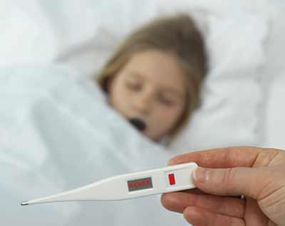
![]() © Photographer: Kameel4u | Agency: Dreamstime.com The inability to sweat makes overheating a danger for people with CIPA. |
Toilet training also tends to be difficult for children with CIPA or congenital insensitivity to pain. They have difficulty telling when they need to use the restroom and often suffer from constipation due to decreased intestinal motility, so toilet training can exceptionally difficult.
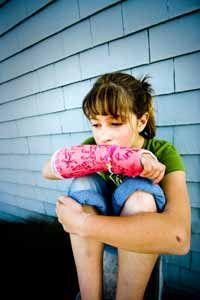
![]() © Photographer: Robert Brown Agency: Dreamstime.com Fractures and other injuries can go unnoticed in someone with CIPA. |
A child with CIPA can break a leg and never notice. Fractures and burns are very common. A problem that's more difficult to deal with is joint deterioration. People with CIPA tend to overwork their joints. When you're sitting or sleeping and you're uncomfortable, you adjust your position to take stress off a certain area of your body. Someone with CIPA won't, and the extra wear and tear can cause swelling and serious injuries to the pelvis, knees and other joints. People with CIPA often suffer from osteomyelitis, a bone infection that can result in reduced limb or joint function and even amputation.
Understanding CIPA
As we saw earlier, CIPA is part of a group of disorders referred to as HSAN, disorders that result in trouble perceiving pain and temperature. CIPA, or HSAN Type IV, is one of the most severe. It's the only HSAN that causes the inability to sweat.
HSAN II, or congenital insensitivity to pain, is a lot like CIPA. People with HSAN II, which is also called congenital sensory neuropathy or CSN, suffer from the same kind of profound sensory loss, but they retain the ability to sweat.
CIPA is an autosomal recessive disorder. This means that for someone to get CIPA, he must receive a copy of the gene from both parents. Each of those parents must have a mutation on an autosomal chromosome, the chromosomes that aren't related to gender. Research indicates that a mutation on the TRKA (NTRK1) gene, which appears to control nerve growth, may be the culprit. There are no reliable statistics on how many people have CIPA at this time, but the condition is quite rare. It does not seem to affect one gender more than another.
![]() |
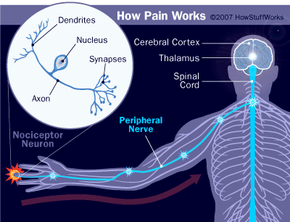
Your peripheral nerves are important to feeling pain. They end in receptors that sense touch, pressure and temperature. Some of them end in nociceptors, which sense pain. Nociceptors send pain messages in electrical impulses along the peripheral nerves, which then travel through the spine and then to the brain. Nociceptor axons are usually unmyelinated, which means that they are slow. Myelin is an insulating sheath that forms around nerves and helps with impulse conduction -- the more myelin, the faster the message. The axons that carry the pain messages from the nociceptors can be either myelinated or unmyelinated, which means that pain messages can travel quickly or slowly. Which path the pain message takes depends on the type of pain -- severe pain travels on the fast path, while lesser pain travels more slowly.
This process doesn't happen for people with CIPA. Studies have found that nerve conduction in people with CIPA appears to be fine, so it's not that the message is getting lost. Some studies have shown a decrease or absence of nerve fibers -- both unmyelinated and myelinated. Without those nerve fibers, the body and brain cannot communicate. Pain messages don't make it to the brain because no one is sending them.
People with CIPA are also missing a nerve supply (innervation) in the epidermis and the eccrine sweat glands. There are two types of sweat glands: eccrine and apocrine. Eccrine sweat glands are all over your body and are used for body temperature regulation. Because there are no nerves in the skin and sweat glands, there is no way for the body and the brain to communicate with one another, resulting in anhidrosis. (You can get a more in-depth in-depth look in How Sweat Works.)
CIPA doesn't have a uniform clinical pattern. For example, most people with CIPA have some form of mental retardation -- but not all. In some patients it's serious, while in others it's very mild.
Treating CIPA
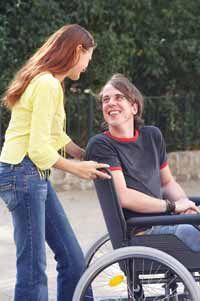
![]() © Photographer: Franz Pfluegl Agency: Dreamstime.com A wheelchair might be necessary as a result of deteriorating joints. |
CIPA doesn't have a cure, at least not yet. So instead, people with CIPA and their families have developed some adaptive strategies to help them in their daily lives. Each person with CIPA needs an individualized plan of care that helps with his own symptoms.
Some tips:
- A child might wear protective eyewear so he won't scratch his eyes.
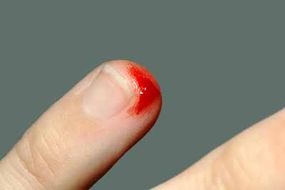
- Parents may teach a child to get help whenever he sees blood on himself -- he might not feel any pain, but he can learn to recognize the sight of blood as a sign of danger.
- When a child is very young, it can be helpful to simply check him all over for injuries at intervals during the day.
- Because people with congenital insensitivity to pain have difficulty telling when they need to use the restroom, setting a timer on a wristwatch can help remind them.
- Physical therapy can help with specific problems caused by CIPA, especially with the joints. It may be helpful to use a wheelchair if joints deteriorate. A person with congenital insensitivity to pain might need occupational therapy to learn different ways to sit and perform other physical tasks in order to put the least stress on the joints.
- Families with a child with CIPA can even find it helpful to move to a cooler climate, so they can worry less about the risk of overheating. It's difficult for someone with CIPA to exercise, but an activity like swimming might be a good bet.
- Most families childproof their house, but this is especially important for families with a child with CIPA. Families must make sure that anything hot or especially dangerous isn't easily accessible.
![]() © Photographer: Sasha Radosavljevic | Agency: Dreamstime.com Parents might teach their child to get help when he sees blood. |
People with CIPA and their families can benefit from being in contact with other families with the same issues. Gift of Pain is a Web site set up by the Gingras family, whose daughter Gabby has CIPA. HelpRoberto.com takes you inside the life of a young boy with CIPA. You can see video and photos and read a blog about Roberto's life.
As with any rare disease, the future for CIPA is in research. With luck and a lot of research funding, people with CIPA and other HSAN disorders might be able to go about their daily lives more easily. To learn more about CIPA and related topics, explore the links on the next page.
Lots More Information
Related HowStuffWorks Articles- How DNA Works
- How Vision Works
- How Sweat Works
- How Gene Pools Work
- How does your body know the difference between dominant and recessive genes?
- What is in an antiperspirant that stops sweat?
- Why does your body temperature rise when you have a virus such as the flu?
- Why do feet stink?
- Can people feel the pain of others?
More Great Links
Sources
- A Life Without Pain. Dir. Melody Gilbert. Frozen Feet Films, 2005.
- American Pain Foundation. Pain Facts & Figures. http://www.painfoundation.org/page.asp?file=Newsroom/PainFacts.htm
- Bonkowsky et al. An Infant With Primary Tooth Loss and Palmar Hyperkeratosis: A Novel Mutation in the NTRK1 Gene Causing Congenital Insensitivity to Pain With Anhidrosis. Pediatrics 2003 112: e237-e241
- Ed. Dale Purvis et al. Neuroscience, Second Edition. 2001. Sinauer Associates: Sunderland, MA, 2001. http://www.ncbi.nlm.nih.gov/books/bv.fcgi?
rid=.0HqwTCrPwGzn9Hm_SL8N_8W3AX - Gajilan, Chris A. "World without pain is hell, parents says." CNN.com. Sept. 26, 2006.
- "The Girl Who Can't Feel Pain." http://abcnews.go.com/GMA/Health/story?id=1386322 ABC News. Dec. 9, 2005.
- "How You Feel Pain." MayoClinic.com. Feb. 13, 2007. http://www.mayoclinic.com/health/pain/PN00017.
- Mardy et al. "Congenital Insensitivity to Pain with Anhidrosis: Novel Mutations in the TRKA (NTRK1) Gene Encoding a High-Affinity Receptor for Nerve Growth Factor." The American Journal of Human Genetics. Vol. 64:1570-1579. 1999.
- NYU School of Medicine and Hospitals Center. Dysautonomia Treatment and Evaluation Center. http://www.med.nyu.edu/pediatrics/fd/
- Online Mendelian Inheritance in Man, OMIM (TM). Johns Hopkins University, Baltimore, MD. MIM Number: {#256800}: {08/10/2005}: .http://www.ncbi.nlm.nih.gov/omim/
- Oppenheim, Keith. "Life full of danger for little girl who can't feel pain." CNN.com. Feb. 3, 2006.