
Manufacturing Crack Cocaine
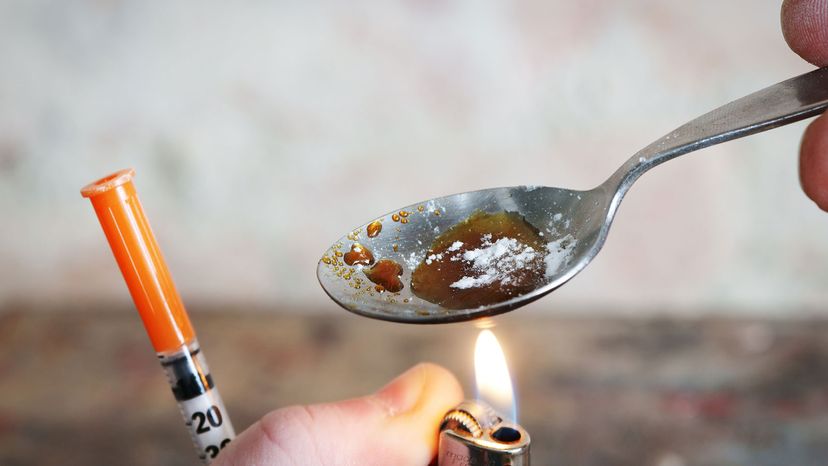
Crack cocaine is an easier-to-manufacture form of freebase cocaine – the only difference between cocaine and crack is that the latter has its hydrochloride removed, increasing the melting point and making the drug smokable. Because its production doesn't require the use of flammable solvents, it is safer to make than freebase cocaine. Without being too specific, here's what's involved in making it [source: Gwynne].
Step 1 : Dissolve powder cocaine in hot water
Advertisement
Step 2 : Add sodium bicarbonate (baking soda) to the mixture
Step 3: Boil the solution to separate out the solids
Step 4: Cool the separated mixture and cut up the solids into "rocks"
Recipes for crack cocaine are readily available online, and it's a relatively simple task to convert cocaine into crack. You only need a few household chemicals and basic chemistry knowledge [sources: Erowid, National Geographic].
Crack rocks are white or tan in color and typically range in size from 0.1 to 0.5 grams. According to the U.S. Drug Enforcement Agency (DEA), crack rocks contain between 80 percent and 100 percent pure cocaine [source: LaVille].
Most of the cocaine that comes into the United States today originates in Colombia, Bolivia and Peru. In spite of decades of political maneuvering, social upheaval, and border policing, Colombia was still the world's biggest supplier of cocaine in 2017. Hundreds of thousands of acres of arable land are used to grow coca plants, and farmers see it as a regular source of income rather than a criminal operation [source: Woody].
Cocaine is usually smuggled into the United States across the Mexican border, often vehicles modified for maximum concealment, or even via underground tunnels, or off the coast, in small submarines. It arrives in the country in powder form and is converted to crack by the wholesaler or retailer (gangs make up most of the retail market in the United States) [source: Nixon].