
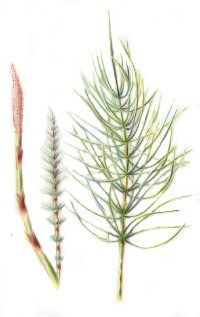
The Latin root equis and common name horsetail refer to this primitive plant's thin, branchlike leaves, which resemble the coarse hair of a horse's tail. Its other common name, scouring rush, derives from the tough plant's use as a natural scouring pad for pots and pans.
Uses of Horsetail
Horsetail is used medicinally to treat bladder infections and bladder weakness. Adults who experience occasional nocturnal incontinence (bed-wetting) may benefit from using horsetail preparations. The herb relieves a persistent urge to urinate.
Advertisement
Horsetail is classified as a diuretic, but sources differ as to its strength in this regard. Horsetail tea or tincture may help people who experience edema (fluid buildup) in the legs caused by such conditions as rheumatoid arthritis and circulatory problems.
Because it contains silica and minerals, horsetail often is used to strengthen bone, hair, and fingernails -- parts of the body that require high mineral levels. You may drink horsetail tea every day -- for no longer than a month -- if you've broken a bone. Horsetail also may be used by those who have wounds that do not heal well.
Keep reading to learn about horsetail warnings and preparations, including directions of how to make horsetail tea.
To learn more about treating common medical conditions at home, try the following links:
- For an overview of all of our herbal remedies, go to the main Herbal Remedies page.
- To learn more about treating medical conditions at home, visit our main Home Remedies page.
- One of the best things you can do for your health and well being is to make sure you are getting enough of the vital nutrients your body needs. Visit our Vitamins page to learn more.
This information is solely for informational purposes. IT IS NOT INTENDED TO PROVIDE MEDICAL ADVICE. Neither the Editors of Consumer Guide (R), Publications International, Ltd., the author nor publisher take responsibility for any possible consequences from any treatment, procedure, exercise, dietary modification, action or application of medication which results from reading or following the information contained in this information. The publication of this information does not constitute the practice of medicine, and this information does not replace the advice of your physician or other health care provider. Before undertaking any course of treatment, the reader must seek the advice of their physician or other health care provider.Before engaging in any complementary medical technique, including the use of natural or herbal remedies, you should be aware that many of these techniques have not been evaluated in scientific studies. Use of these remedies in connection with over the counter or prescription medications can cause severe adverse reactions. Often, only limited information is available about their safety and effectiveness. Each state and each discipline has its own rules about whether practitioners are required to be professionally licensed. If you plan to visit a practitioner, it is recommended that you choose one who is licensed by a recognized national organization and who abides by the organization's standards. It is always best to speak with your primary health care provider before starting any new therapeutic technique.
Advertisement