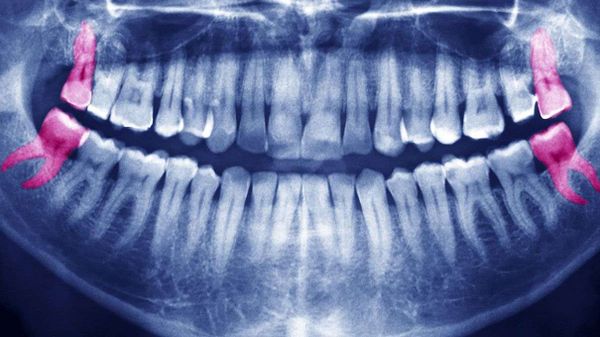
If you're ever stuck at a party with nothing to talk about, you might mention that you're having your wisdom teeth taken out. The very mention of these teeth can start a war of words, as people duke it out to prove that their oral surgery was indeed the worst experience ever. The details of this rite of passage are ingrained in each person's mind, so you'll hear lots of gory information -- how one girl's face swelled as big as a watermelon, how another girl battled dry sockets, how one fellow had to miss Christmas dinner because the only thing he could eat was Jell-O. Debates will rage about the virtues of going under or staying awake during the surgery, and battle-scarred soldiers will compare how many teeth they had pulled. You can sit back and congratulate yourself for livening up this party.
Wisdom teeth are more formally known to dentists as third molars, while informally, they're known to oral surgeons as cash cows and to those of us who've had them removed, a source of surgical misery. These teeth were named for the time at which they make their appearance at the very back of the mouth, which is usually between the ages of 17 and 25, when a young person might be pursuing wisdom with higher education [source: Cooper].
Advertisement
The third molars have the nasty habit of becoming impacted, or coming in at a funny angle or in an unexpected location. This poor positioning can cause pain and infection, and even if the teeth happen to come in correctly, there could still be trouble ahead. The third molars are difficult to clean, so they could rot and infect nearby teeth; they may also crowd adjacent teeth, undoing years of straight alignments created by braces. For these reasons, dentists usually recommend removing wisdom teeth in young adults, before the teeth have the chance to attach to the jaw and complicate extraction.
Though you may miss a few days of school or work for the surgery, you probably won't miss your wisdom teeth once they're gone, because we don't use them anymore. But if we don't need them, why do these teeth come in at all? Is it possible they may eventually disappear?
Advertisement