These tests are done every time you visit your obstetrician and include:
- blood pressure
- urine glucose
- urine protein
- fetal heartbeat - beginning when the baby's heart is developed enough to to be heard
Blood Pressure
The increased blood volume and fetal blood circulation that occurs in pregnancy increases the demands on your cardiovascular system, especially your heart. So, your blood pressure will be measured regularly to detect any signs of high blood pressure or pregnancy-induced hypertension. About five percent of pregnant women experience pregnancy-induced hypertension starting about the 20th week of pregnancy. This condition can can lead to the following complications:
- Pre-term labor
- Separation of the placenta, leading to bleeding
- Reduced kidney function or failure
- Reduced blood flow to the baby, which can retard its growth and development
Pregnancy-induced hypertension, along with swelling (edema) and protein in the urine (albuminuria), comprise a condition known as preeclampsia. The cause of pre-eclampsia is unknown and the treatment is premature delivery of the baby, if possible. Sometimes, high doses of magnesium sulfate can be given to delay the symptoms until the baby can be delivered safely; no one knows why this treatment can work.
Your blood pressure will be measured with a blood pressure gauge or sphygmomanometer (read this question about blood pressure gauges for more details).
Urine Glucose
During each doctor's visit, you will be asked to pass a test strip through your urine stream or collect a sample of urine, which will be tested with a strip that measures the amount of glucose in your urine. The presence of glucose in the urine is an indication of gestational diabetes, a form of diabetes that usually develops around the 20th week of pregnancy. Gestational diabetes causes the following complications:
- The baby grows larger than normal and develops more fat. Large babies are difficult to deliver.
- The baby's pancreas must secrete large amounts of insulin to get rid of the excess sugar coming from the mother. After birth, when the baby is no longer receiving these high amounts of sugar from the mother, the high insulin levels can cause the baby's blood sugar to fall dangerously low (i.e., hypoglycemia).
- Some babies from mothers with gestational diabetes have trouble breathing when they are delivered (i.e., respiratory distress).
Gestational diabetes can be treated usually by monitoring the mother's diet. However, sometimes the mother must take insulin to control her blood glucose levels. Gestational diabetes in the mother usually goes away once the baby has been delivered.
The test strip contains two enzymes (glucose oxidase and peroxidase), a chemical (orthotolidine) and a yellow dye impregnated in the paper. The reactions go like this:
- Glucose oxidase converts glucose into gluconic acid and hydrogen peroxide.
- Peroxidase reacts the hydrogen peroxidase with orthotolidine to produce a blue color.
- The yellow dye spreads the color change out over a wider range in proportion to the amount of glucose present.
If no glucose is present, then the test strip remains yellow. If glucose is present, then the color can vary from light green to dark blue, depending upon the concentration of glucose in the urine.
Urine Protein
The presence of protein in the urine indicates a problem in kidney function and is one of the symptoms of pre-eclampsia, as mentioned above. To detect protein in the urine, the test strip has a pH buffer (citrate buffer) and a color indicator (bromphnol blue) impregnated in the paper. At the normal pH of the paper, most of the indicator is not ionized. Proteins can bind to the nonionized form and release hydrogen ions, which changes the pH and the color of the paper. If protein is present, then the color of the paper will change from yellow to green or blue, depending upon the concentration of protein.
Fetal Heartbeat
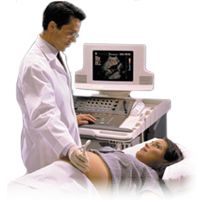
One of the more emotional times in an early pregnancy may be the first time you hear the baby's heartbeat. The baby's heartbeat can be seen in a Doppler ultrasound as early as five to six weeks of development. By 12 to 13 weeks, your doctor can hear the heartbeat using a specialized ultrasound stethoscope or Doppler stethoscope. The Doppler stethoscope works like a regular ultrasound machine except that it does not give an image. Instead, the echoes are counted and the count is displayed on a LCD readout. If the stethoscope has a speaker, you can hear the baby's amplified heart beat.