
Skin Anatomy
Skin anatomy is often more complex than people think. Learn more about skin anatomy at HowStuffWorks.

Why Do Bruises Change Colors as They Heal?

Quick Tips: Does taking an aspirin daily affect your skin?
5 Things to Know About Lactic Acid in Skin Care
How Can Skin Be Oily Yet Dry?
Quick Tips: Are petroleum-based face creams good for sensitive skin?

What is The Difference Between the Skin On Your Face and Your Body?

Quick Tips: 5 Best Fruits to Help Skin

Quick Tips: 5 Ways to Feed Your Skin the Nutrients It Needs

Top 10 Foods for Beautiful Skin
Learn More
Some people think of vegetarians as "stinky." But does that stereotype have any basis in fact, and is it due solely to their plant-based diets?

Sweat is your body's way of cooling itself. Learn about eccrine and aprocrine sweat glands, how the body makes sweat, why we sweat and what factors affect sweating.

What happens to dead skin cells when they fall off your body? Are you sure you want to know? If you're sure you want the answer to this question, get ready for some staggering numbers.
Advertisement

Adolescence seems like the worst surprise ever -- where did all of this hair and these bumps come from? And why do I smell terrible? Don't despair -- we've laid out five ways skin changes during those years so you'll know what you're dealing with.

Your skin is your body's largest organ and protects you from the elements, but how does it protect itself from toxins? Believe it or not, you actually do most of the work.
By Dave Roos

Aging skin is a fact of life. At some point in each of our lives, our smooth and supple exteriors become dry, wrinkled and saggy. And although much of aging is biologically inevitable, there are some things you can do to protect yourself from the ravages of time.

If senior superlatives were given to human organs, the heart would win "hardest working," while the lungs would garner "most athletic." But what would the skin be noted for? Our guess is "most underappreciated" -- not to mention "best dressed."
Advertisement

If skin grafts seem painful to you, that's because they are. Skin grafts are patches on skin that are attached or sewn to open wounds to help them heal. They may be excruciating, but they save lives.
By Dave Roos

You saved up money for a special ring for your lady friend, but the one you buy leaves a green stain on her finger. Why in the world did it do that?

Your skin is your largest organ, and it's constantly shedding skin cells and replacing them -- but how much skin do you really have?

If you have oily skin, that waxy substance that makes your face shine, triggers breakouts and causes your makeup to run is sebum. Everyone's skin produces sebum, but what exactly is it, and what does it do?
Advertisement

For every hair on your body, there is a corresponding skin pore. We tend not to notice our pores unless they're extra-big or blocked with gunk. What are they for, and how can we keep them looking, well, unnoticeable?
By Tom Scheve
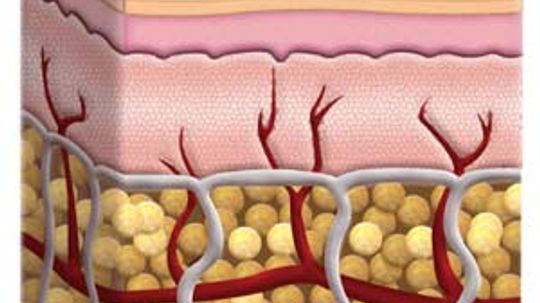
Your skin has three layers that each serves an important purpose. Though you cannot see it, the innermost layer is composed of subcutaneous tissue, an all-important insulator that regulates your body’s temperature and protects your insides.
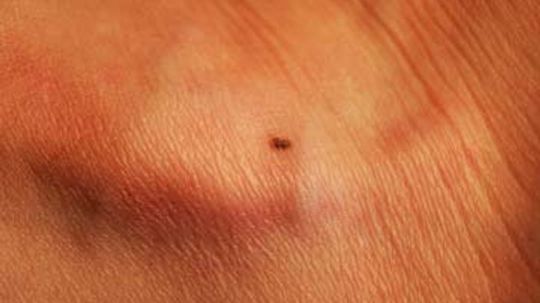
It might look like a perfectly harmless little mole or freckle but it could be a ticking time bomb that will greatly affect your health. Melanoma accounts for approximately 5 percent of cancer cases. Do you know how to spot a cancerous mole?

Whether it's a warm handshake with a friend or a tentative test of a hot stove, the sense of helps us understand the world around us. How do our touch receptors relay information about temperature, pain and pressure to our brain?
Advertisement

When you take your facial fingerprint, you're collecting information on the aging process. What can a piece of transparent tape tell you about the condition of your skin?
By Gina Fisher

No matter how old you are, deep wrinkles on your face may tell a different story. How do you determine your skin age, and what are some of the factors that contribute to fine lines and dryness?
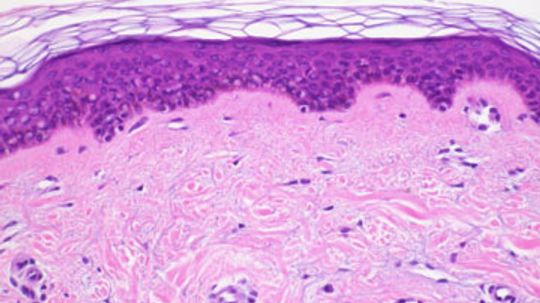
Your skin is one of the most important organs of your body, and it's also the largest. By acting as a barrier to the outside elements, it protects your internal organs from harm. But what is your skin actually made of?
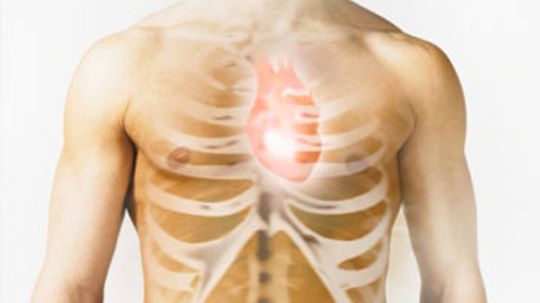
Even though it's your body's largest organ, it's easy to take skin for granted. But it plays an important role as a protective barrier and temperature regulator. How does skin affect your overall health?
Advertisement

Pregnancy is a time of joy for many mothers, but sometimes it's accompanied by various skin problems. Are they anything to worry about? And will they go away after the baby is born?
Your skin can use all kinds of vitamins to stay healthy, but one -- vitamin D -- is so important that your skin actually produces it. If you aren’t getting enough vitamin D, though, it can lead to problems.

Most people get out of the bath or pool to find the skin on their hands and feet temporarily shriveled. What causes these wrinkles, and are they any different from those that are linked to aging?

You might not give too much thought to the health of your epidermis. But this thin, surface layer of skin is essential. How does it keep the rest of your body healthy?
Advertisement
The palms of your hands and soles of your feet are different from the rest of your skin for a reason. What special jobs do they do that other body parts don't?

What exactly is an itch? Find out what your nerves register as "itching" and why you need to scratch so badly.