Learn More |
There are many habits we want to impart to our children -- brushing their teeth, picking up after themselves, having good personal hygiene -- but none has as much total impact as good fitness habits. A child who exercises will grow into an adult who exercises, and that's good news for his physical and mental well-being.
- Newborn Exercise Basics
What's the purpose of exercising with a newborn? What kind of exercises can a newborn do? You'll find the answers to these questions in this section, plus suggestions on beginning your own baby workout regimen, including what to wear, when to start, and how to create an environment conducive to physical activity. Learn how to incorporate exercise into your baby's daily routine and how to encourage his participation by becoming an active role model. The benefits to your baby's well-being are enumerated with a particular focus on promoting family togetherness through exercise.
- Exercises for a Child, 1 to 6 Months
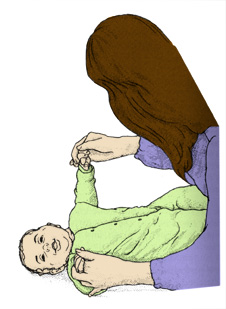
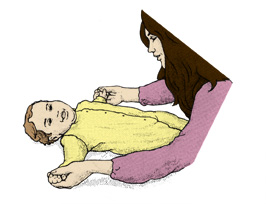
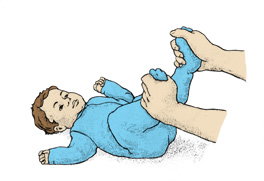
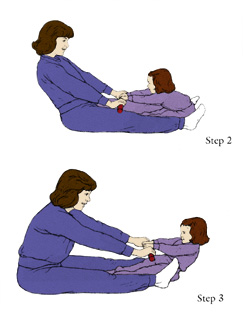
In this section, we provide detailed instructions on exercises for 1 to 6 month olds. Grip is an easy arm stretching exercise for your newborn. Chest Cross, a similar exercise, develops your baby's range of motion while allowing him to experience different movement of their arms. For his lower body, perform Bicycle -- most infants love the feel of their legs circling in and out. In Pull Up, the newborn equivalent of a sit up, you help your baby move from a prone position to sitting upright. And Elbow Stand focuses on your newborn's upper body strength, particularly his chest, deltoids and triceps -- the muscle group which will help him when he's ready to locomote. - Exercises for a Child, 7 to 11 Months
As your newborn enters the second half of his initial year of life, he'll amaze you with new feats of strength and control. The more advanced exercises in this section will help him hone his new skills. For flexibility (and the all-important toe munching that babies adore!), try Toe to Ear with your baby. Wheelbarrow and Hand Walk are advanced version of Elbow Stand, now using straight arms to help your newborn with his crawling. And to strengthen your baby's legs in preparation for walking, Mountain Climbing is an exercise you'll both enjoy. - Upper Body Exercises for a Child, the Second Year
After her first birthday, your baby officially becomes an on-the-go toddler -- always moving, always learning. Maintaining a daily workout program with your child will enhance their ever-evolving physical abilities, and you'll find several excellent exercises on this page. Because a strong core translates to improved overall strength, Lay-Back and Hip Lift focus on working the trunk muscles. Your toddler will increase her flexibility while enjoying your closeness as you perform Touch and Hug. And Let's Squat, a simpler version of the traditional squat exercise, builds balance as well as the quadriceps. - Lower Body Exercises for a Child, the Second Year
A continuation of the previous page, More Exercises for the Second Year features some new stretches and the addition of equipment. In Curl-Down and Head to Toes, your toddler will continue to strengthen his abdominal muscles. You'll need a 2x4 for the next two exercises, Train Track and Board Walk, which focus on eye-foot coordination. Finally, your toddler will begin to develop his sport-playing prowess with Ball Toss. Although you begin by rolling the ball, you may soon be tossing it as his hand-eye coordination improves. - Upper Body Exercises for a Child, the Third Year
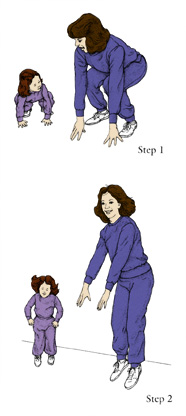
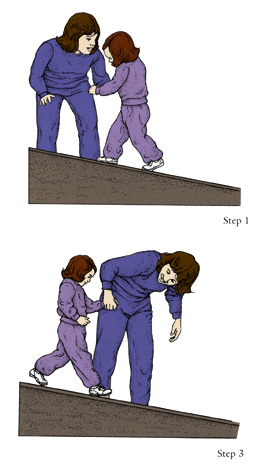
A two year old can run, climb, jump -- apparently for hours at a time! On this page, we discuss your toddler's new skills as well as her rapidly developing mental capabilites. The exercises for your toddler in this section incorporate your child's increased abilities with more demanding cardiovascular exercises and more challenging equipment. For the lower body, try Squat Bend and Jack-in-the-Box, then do Rowing for an upper body challenge. The Hill Walk improves balance and coordination while increasing spatial awareness. For strong abdominals, Toe Touch is a fun exercise (just be sure you have clean feet before you work out!). - Lower Body Exercises for a Child, the Third Year
You'll need a hula hoop and a balance beam (you can make your own from a 2x4 and sawhorses) for the additional exercises for the third year in this section. Your two year old will enjoy Hug Yourself, which stretches the muscles in his shoulders and arms. To increase his balance and confidence, help him "walk the plank" in Balance Beam Walk. Another excellent exercise for developing coordination is Jump in the Hoop. Teach your toddler Basic Push-Up to increase chest, shoulder and arm strength. And to complete his physical regime, work out the abdominal muscles and stretch the lower back with Angry Cat.
If you're ready to learn the how-to exercise with a child, click to the next page and get started!
Advertisement