Can you imagine how long the average life expectancy would be if cancer were ever eradicated the way polio and smallpox have been? It's amazing to think about what doctors might be able to achieve in our lifetime. Scientists have made significant inroads in the last few decades and are now testing several vaccines that could possibly lead to the complete prevention of cancer. To learn more about cancer, please read How Cancer Works.
Probably the most promising form of cancer treatment is in immunotherapy, where scientists are developing several experimental cancer vaccines that could lead to the eradication of cancer this century. There are two major categories that cancer vaccines fit into:
- Specific cancer vaccine
- Universal cancer vaccine
As the name suggests, specific cancer vaccines are designed to treat specific types of cancers. In other words, a vaccine could be developed for lung cancer, another vaccine could be used to treat colon cancer, and yet another vaccine could treat skin cancer, and so on. A more appealing cancer vaccine would be one that could fight cancer cells regardless of cancer type. This type of vaccine is called a universal cancer vaccine. See this news report on a new universal cancer vaccine being developed.
In these two categories, there are more specific types of cancer vaccines. Each type of cancer vaccine works on the same basic idea: The vaccine, which contains tumor cells or antigens, stimulates the patient's immune system, which produces special cells that kill cancer cells and prevent relapses of the cancer. Unlike vaccines for other disease that prevent the occurrence of the disease, there isn't a vaccine in development that can prevent the onset of cancer. Cancer vaccines are used only as a treatment after the cancer has been found in a patient. Here is a list of five kinds of cancer vaccines being developed:
- Antigen vaccines
- Anti-idiotype vaccines
- Dendritic cell vaccines
- DNA vaccines
- Tumor cell vaccines
Antigen vaccines use tumor-specific antigens -- proteins displayed on a tumor cell -- to stimulate the immune system. By injecting these antigens into the cancerous area of the patient, the immune system will produce an increased amount of antibodies or cytotoxic T lymphocytes, also known as killer T cells, to attack cancer cells that carry that specific antigen. Multiple antigens can be used in this type of vaccine to vary the immune system response.
In some instances, some antibodies, called idiotype antibodies, act as antigens, triggering an immune response similar to that described above. In this case, the immune system will produce anti-idiotype antibodies to attack the idiotypes. Scientists have found a way to mass-produce anti-idiotype antibodies to produce a vaccine that can be injected to treat cancer.
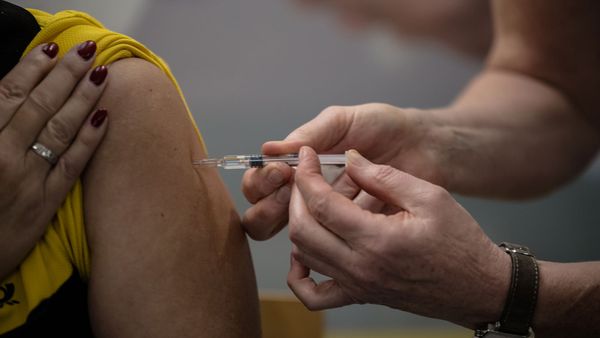
Dendritic cells break the antigens on the cancer cell surfaces into smaller pieces. The dendritic cells then act as most-wanted posters for the immune system, displaying those antigen pieces to the killer T cells. To make a dendritic cell vaccine, scientists extract some of the patient's dendritic cells and use immune cell stimulants to reproduce large amounts of dendritic cells in the lab. These dendritic cells are then exposed to antigens from the patient's cancer cells. This combination of dendritic cells and antigens is then injected into the patient, and the dendritic cells work to program the T cells.
With recent DNA (deoxyribonucleic acid) research, scientists are finding ways to use the genetic code of proteins produced in cells to aid the immune systems fight against cancer. Bits of DNA from the patient's cells are injected into the patient, which instructs the other cells to continuously produce certain antigens. This DNA vaccine increases production of antigens, which forces the immune system to respond by producing more T cells.
Tumor cell vaccines can be produced using cancer cells from the patient or another patient. These cells are killed and injected into the patient. While the cells are dead, the antigens are still recognized by the the immune system, which responds by attacking the dead cells. The immune system will also attack the live cancer cells carrying the antigen that was displayed on the dead cells.
While scientists have had some success with each of these cancer vaccines, it is still much too early to predict when a true cancer vaccine will be developed. However, science has brought us closer than ever to being able to develop a method that could eradicate some forms of cancer in our lifetime, if not all cancer entirely.