Muscles are one of those things that most of us take completely for granted, but they are incredibly important for two key reasons:
- Muscles are the "engine" that your body uses to propel itself. Although they work differently than a car engine or an electric motor, muscles do the same thing -- they turn energy into motion.
- It would be impossible for you to do anything without your muscles. Absolutely everything that you conceive of with your brain is expressed as muscular motion. The only ways for you to express an idea are with the muscles of your larynx, mouth and tongue (spoken words), with the muscles of your fingers (written words or "talking with your hands") or with the skeletal muscles (body language, dancing, running, building or fighting, to name a few).
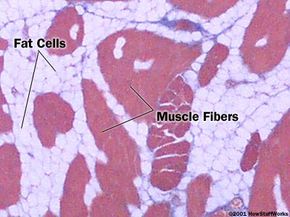
Because muscles are so crucial to any animal, they are incredibly sophisticated. They are efficient at turning fuel into motion, they are long-lasting, they are self-healing and they are able to grow stronger with practice. They do everything from allowing you to walk to keeping your blood flowing!
Advertisement
When most people think of "muscles," they think about the muscles that we can see. For example, most of us know about the biceps muscles in our arms. But there are three unique kinds of muscle in any mammal's body:
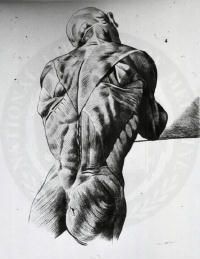
- Skeletal muscle is the type of muscle that we can see and feel. When a body builder works out to increase muscle mass, skeletal muscle is what is being exercised. Skeletal muscles attach to the skeleton and come in pairs -- one muscle to move the bone in one direction and another to move it back the other way. These muscles usually contract voluntarily, meaning that you think about contracting them and your nervous system tells them to do so. They can do a short, single contraction (twitch) or a long, sustained contraction (tetanus).
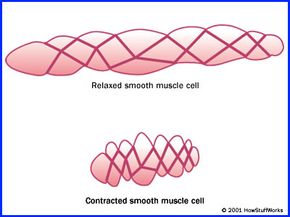
- Smooth muscle is found in your digestive system, blood vessels, bladder, airways and, in a female, the uterus. Smooth muscle has the ability to stretch and maintain tension for long periods of time. It contracts involuntarily, meaning that you do not have to think about contracting it because your nervous system controls it automatically. For example, your stomach and intestines do their muscular thing all day long, and, for the most part, you never know what's going on in there.
- Cardiac muscle is found only in your heart, and its big features are endurance and consistency. It can stretch in a limited way, like smooth muscle, and contract with the force of a skeletal muscle. It is a twitch muscle only and contracts involuntarily.
In this article, we will look at the different types of muscles in your body and the amazing technology that allows them to work so well. From here on, we will focus on skeletal muscle. The basic molecular processes are the same in all three types.
Advertisement