
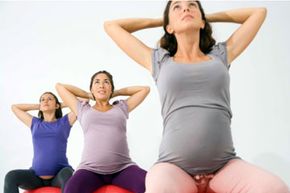
During pregnancy, exercise helps your body in two ways: It keeps your heart strong and your muscles in shape, and it relieves the basic discomforts of pregnancy — from morning sickness to constipation to achy legs and backs. Studies show that the earlier in pregnancy a woman gets regular exercise, the more comfortable she is likely to feel throughout the nine months. Some evidence shows that regular exercise makes for shorter labor, too.
No matter what your particular exercise regimen may be, keep in mind the basic rules for working out during pregnancy. The following is a list of things to consider when keeping up activities as your baby grows larger and larger.
Advertisement
If you have a moderate exercise routine, keep it up. If you've been pretty sedentary, don't suddenly plunge into a strenuous program; ease in slowly. Keeping up a regular schedule of moderate activity is better than engaging in infrequent spurts of intense exercise.
- Avoid overheating, especially during the first six weeks of pregnancy.
- Avoid exercising flat on your back for long periods of time; doing so may reduce blood flow to your heart.
- Try not to beat yourself up if you find that pregnancy makes it harder to continue the workout routine you're accustomed to. Modify your program according to what you can reasonably tolerate. Listen to your body. If weight-lifting suddenly hurts your back, lighten up. You may find it easier to perform nonweight-bearing exercises like swimming or bicycling.
- Watch how your center of gravity shifts. You probably should avoid surfing, horseback riding, skiing, or any other sport that can cause injury if you're out of balance. Also avoid anything that puts you at risk of being hurt in the abdomen, and high-impact, bouncy exercises that can tax your loosening joints.
- Carry a bottle of water to every exercise session and stay well hydrated.
- Eat a well-balanced diet that includes an adequate supply of carbohydrates.
- Talk to your practitioner about what your peak exercise heart rate should be. (Many practitioners suggest 140 beats per minute as the upper limit.) Then regularly measure your heart rate at the peak of your workout to make sure that it's at a safe level.
Stop exercising — and talk to your doctor — if you experience any of these symptoms:
- Shortness of breath out of proportion to the exercise you are doing
- Vaginal bleeding
- Rapid heartbeat (that is, more than 140 beats per minute)
- Dizziness or feeling faint
- Any significant pain
- Types of exercising to consider while pregnant
See the next page for more specific information on how pregnancy affects common types of exercises.
Advertisement