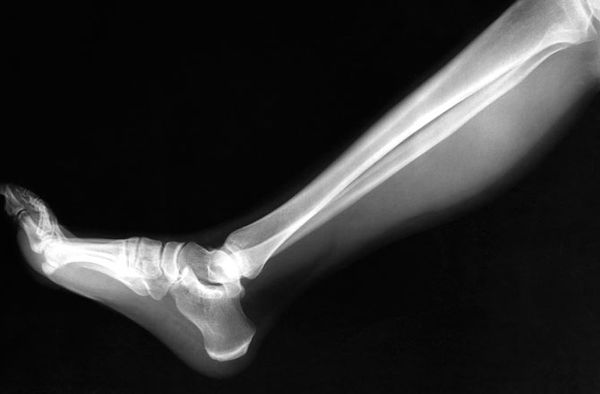
Various complications can occur with fractures depending on the bone, the severity of the break and the person's age. Children are susceptible to additional forms of fractures, but their bones tend to heal faster and more completely than those of adults.
Infection poses a threat to any compound fracture, as the break in the skin can allow germs to enter. Broken ribs can potentially pierce internal organs, and the healing process itself can inadvertently harm other organs or tissues. In compartment syndrome, a fracture's injured muscle swells so tightly that oxygen can't enter the high-pressure tissue. Without sufficient oxygen, the muscle tissue can continue to swell until injury and muscle death ensue. Pulmonary embolism occurs when a fracture's blood clotting breaks loose and blocks a lung artery. This condition is particularly common with hip and pelvis fractures, accounting for an estimated one-third of hip-fracture deaths [source: The Merck Manuals Online Medical Library Home Edition].
With all of these possibilities in mind, a doctor approaches a suspected fracture by following several steps to ensure the bone heals properly.
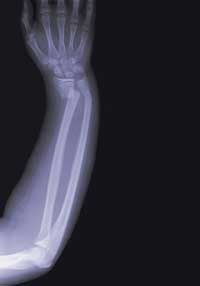
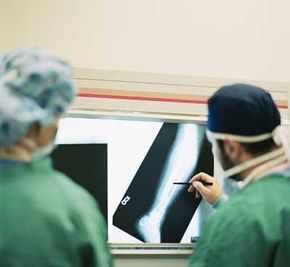
- Diagnosis: The first step involves the doctor determining whether a fracture occurred and, if so, the severity of the injury. The following steps of treatment depend on the physician knowing exactly what he or she is dealing with. Doctors generally accomplish this by examining the patient and inspecting the x-ray of the damaged area.
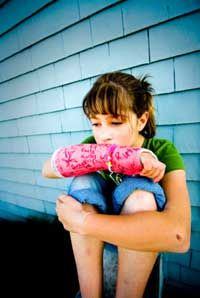
- Immobilization: Just as the body does its part to line up broken bones and limit mobility, a doctor must ensure this alignment. He or she further immobilizes the affected area with a splint, cast, brace or sling. Because a fracture may require further alignment, a patient might need anything from a local anesthetic to spinal anesthesia to temporarily lessen the pain.
- Traction: Simple immobilization isn't always enough to ensure proper bone healing. In the case of more complex factures, a system of weights, ropes and pulleys constantly pull on fractured limbs to maintain alignment.
- Surgery: Most fractures can be treated without surgery. However, some injuries require doctors to aggressively treat the damaged bone. Sometimes doctors perform surgery to remove foreign materials or bone fragments. The best way to stabilize certain fractures is to go in and align the bones with metal rods, implanted screws and pins. Some fractures, such as those to the hip and joints, require artificial replacements.
- Rehabilitation: The same immobilization that keeps stress off the healing bone also leaves the surrounding muscles with little to do. This leads to the loss of muscle mass, strength and flexibility. Special exercise regimes allow individuals to gradually rehabilitate their newly healed limbs without risking re-injury.
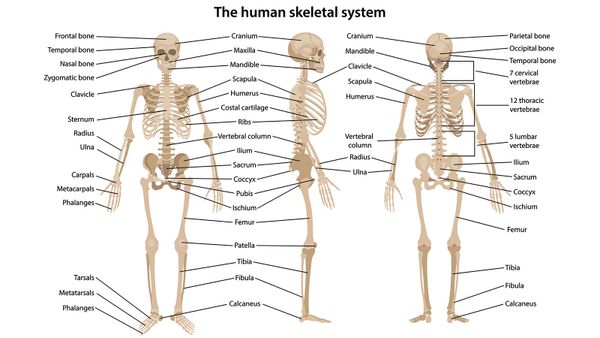
To learn more about the human skeletal system and how to keep your bones healthy, visit the links on the next page.