Introduction to Home Remedies for Canker Sores
It may only be the size of a pencil eraser, but a canker sore can be hard to ignore. You know it's there, and it hurts whenever you eat or drink.
Fortunately, a canker sore is usually a fairly short-lived misery, and there are a few home remedies you can employ to find some temporary relief.
First, however, you need to be able to tell the difference between a canker sore and a cold sore, or fever blister, which is caused by the herpes virus. A cold sore often begins as several tiny blisters that eventually form one larger sore. They appear most often on the lips and face.
In contrast, canker sores usually travel alone. And unlike a sore caused by the herpes virus, a canker sore is not contagious. A canker sore has a yellow or white-gray center with a well-defined red border. It generally measures three to five millimeters in diameter and is usually located on the inside of the lip or cheek or, less commonly, on the tongue. They hurt like the dickens, but usually they're not serious. The most painful phase lasts about three to four days, and the sores go away in about ten days.
(Note: Any white spot in your mouth that persists longer than ten days should be checked by your dentist or doctors, as it may indicate a serious medical condition.)
What causes canker sores? No one knows for sure, though they frequently afflict people who are fatigued or stressed out or who have poor diets. Not surprisingly, canker sores often crop up in the mouths of students taking final exams. Medical evidence also suggests that people taking certain drugs for rheumatoid arthritis may be more prone to developing cankers. And heredity is a factor, too. If both your parents were canker sore sufferers, there's a 90 percent chance you will be, too. Cankers may also occur as a result of a minor injury in the mouth, such as from a slip of the toothbrush or a jab from a taco shell. Certain foods, such as spicy dishes and citrus fruits, have also taken some of the blame.
![]() ©2007 Publications International, Ltd. Citrus fruits may be among the causes of canker sores. |
Read on for home remedies that can provide relief so you don't have to be cranky from canker sores.
For more information on remedies for conditions affecting the mouth, try the following links:
- To see all of our home remedies and the conditions they treat, go to our main Home Remedies page.
- Home Remedies for Cold Sores gives helpful advice for another type of sore that develops around the mouth.
- For tips on keeping your mouth clean and healthy, read How Oral Hygiene Works.
The brand name products mentioned in this publication are trademarks or service marks of their respective companies. The mention of any product in this publication does not constitute an endorsement by the respective proprietors of Publications International, Ltd. or HowStuffWorks.com, nor does it constitute an endorsement by any of these companies that their products should be used in the manner described in this publication.

Home Remedy Treatments for Canker Sores
Relief is what you need, and fast. Keep in mind, though, that as some doctors are fond of telling patients, a canker sore will last seven days with treatment and one week without treatment. Not the most reassuring news. In some cases, a canker sore can take up to two weeks to heal; if one sticks around longer than that, see your dentist. There are ways to get relief in the interim by using the following home remedies.
If you've got a sore that doesn't go away, see your dentist, even if it doesn't bother you. Ironically, while a canker sore hurts and stings, a painless ulcer in the mouth may be the first sign of oral cancer. And while a canker sore will usually disappear in seven to ten days, a cancerous lesion will not. About 30,000 new cases of oral cancer are diagnosed each year in the United States. Other conditions can also cause mouth ulcers that resemble canker sores, including iron deficiency anemia, pernicious (vitamin B12 deficiency) anemia, folic acid deficiency, gluten intolerance, celiac disease, and Crohn's disease. |
reducing the pain.
Make your own remedy. It may sound like a strange combination, but several dentists swear by this homemade remedy: Mix together equal amounts of Milk of Magnesia or Kaopectate and Benylin or Benadryl. Milk of Magnesia and Kaopectate both contain ingredients that coat wet tissues, such as those in the mouth. Benylin and Benadryl contain ingredients that act as mild topical anesthetics and antihistamines (which reduce inflammation). Apply the mixture to the canker sore using a cotton swab. Be careful not to swallow the stuff; you could end up anesthetizing (numbing) the reflex that keeps the windpipe closed when you swallow.
Go over-the-counter. Use an over-the-counter (OTC) product such as Orabase with Benzocaine, which covers the surface of the sore like an "oral bandage." Keeping it coated will help prevent it from getting infected. Products with xylocaine, a local anesthetic, can also dull the pain.
Take two aspirin. A dose of aspirin, acetaminophen, or ibuprofen may help relieve the pain, especially before meals if the canker sore interferes with eating. Do not give aspirin to anyone under 19 years of age, however, and talk to your doctor before taking an OTC pain reliever if you are pregnant or breast-feeding; require more than an occasional dose or are currently taking any other medication; have ever had an allergic reaction to an OTC pain reliever; have a bleeding disorder, bleeding in the stomach or intestines, or a peptic ulcer; have liver or kidney disease or any chronic illness; or drink three or more alcoholic beverages every day. Consult this list of precautions to take when using over-the-counter analgesics.
Stick to cool foods. Stay away from foods that are hot, in terms of temperature or spiciness. They'll burn and sting a tender canker sore.
Be gentle. Wield that toothbrush extra carefully to avoid irritating a canker sore. You may want to avoid rough, scratchy foods such as chips for the time being as well.
Stop bad habits. Alcohol and smoking can irritate a canker sore. A little abstinence may provide a lot of relief.
Check out your diet. One old wives' tale blames canker sores on tomatoes. Experts admit some sort of allergic reaction to foods may be to blame, but others point out that food allergies can cause lesions that resemble canker sores. If you're plagued with frequent canker sores, pay attention to whether an outbreak seems to be linked with any particular food. Likely offenders include nuts, shellfish, chocolate, and tomatoes. If you discover a connection, avoid the offending food.
Learn to handle stress. That's the best advice for preventing canker sores. Try to find some method of relieving or coping with stress. Examples that you might try include engaging in a hobby, an exercise program, yoga, or meditation.
Read the next section to learn how kitchen staples can help take the sting out of canker sores.
For more information on remedies for conditions affecting the mouth, try the following links:
- To see all of our home remedies and the conditions they treat, go to our main Home Remedies page.
- Home Remedies for Cold Sores gives helpful advice for another type of sore that develops around the mouth.This information is solely for informational purposes. IT IS NOT INTENDED TO PROVIDE MEDICAL ADVICE. Neither the Editors of Consumer Guide (R), Publications International, Ltd., the author nor publisher take responsibility for any possible consequences from any treatment, procedure, exercise, dietary modification, action or application of medication which results from reading or following the information contained in this information. The publication of this information does not constitute the practice of medicine, and this information does not replace the advice of your physician or other health care provider. Before undertaking any course of treatment, the reader must seek the advice of their physician or other health care provider.
The brand name products mentioned in this publication are trademarks or service marks of their respective companies. The mention of any product in this publication does not constitute an endorsement by the respective proprietors of Publications International, Ltd. or HowStuffWorks.com, nor does it constitute an endorsement by any of these companies that their products should be used in the manner described in this publication. - For tips on keeping your mouth clean and healthy, read How Oral Hygiene Works.
Natural Home Remedies for Canker Sores
You can find over-the-counter antiseptic creams, lozenges, and mouthwashes at your local pharmacy to help relieve canker sore pain. But you can also find home remedy relief over the kitchen counter in some common and not-so-common kitchen staples.
Baking soda. Make a baking soda and water paste and apply to the canker. Baking soda is also a component of a canker sore mouth rinse (see "Salt", below).
Ice. This won't make the canker disappear, but it will sure make it feel better. Simply apply ice or rinse your mouth with ice water.
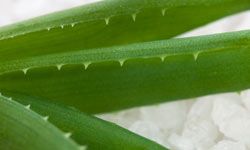
![]() ©2007 Publications International, Ltd. Aloe juice is a natural treatment for canker sores. |
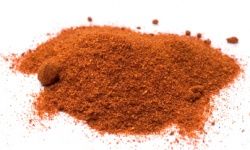
Cayenne pepper.
Minerals. A mineral deficiency is suspected of being a cause of canker sores. Make sure you get enough of the right minerals in your diet by checking with your doctor.
Aloe. That beautiful aloe plant sitting on your sill has some quite potent curative powers. A little aloe juice from the juicy inner portion of the leaf rinsed over the canker several times daily could be just what you need.
Canker sores can be a painful nuisance, but there are simple, everyday home remedies you can use to relieve some of the discomfort. Using the advice in this article, you should have no problem keeping your mouth healthy.
For more information on remedies for conditions affecting the mouth, try the following links:
ABOUT THE AUTHORS:
Timothy Gower is a freelance writer and editor whose work has appeared in many publications, including Reader's Digest, Prevention, Men's Health, Better Homes and Gardens, The New York Times, and The Los Angeles Times. The author of four books, Gower is also a contributing editor for Health magazine.
Alice Lesch Kelly is a health writer based in Boston. Her work has been published in magazines such as Shape, Fit Pregnancy, Woman's Day, Reader's Digest, Eating Well, and Health. She is the co-author of three books on women's health.
Linnea Lundgren has more than 12 years experience researching, writing, and editing for newspapers and magazines. She is the author of four books, including Living Well With Allergies.
Michele Price Mann is a freelance writer who has written for such publications as Weight Watchers and Southern Living magazines. Formerly assistant health and fitness editor at Cooking Light magazine, her professional passion is learning and writing about health.
ABOUT THE CONSULTANTS:
Ivan Oransky, M.D., is the deputy editor of The Scientist. He is author or co-author of four books, including The Common Symptom Answer Guide, and has written for publications including the Boston Globe, The Lancet, and USA Today. He holds appointments as a clinical assistant professor of medicine and as adjunct professor of journalism at New York University.
David J. Hufford, Ph.D., is university professor and chair of the Medical Humanities Department at Pennsylvania State University's College of Medicine. He also is a professor in the departments of Neural and Behavioral Sciences and Family and Community Medicine. Dr. Hufford serves on the editorial boards of several journals, including Alternative Therapies in Health & Medicine and Explore.
The brand name products mentioned in this publication are trademarks or service marks of their respective companies. The mention of any product in this publication does not constitute an endorsement by the respective proprietors of Publications International, Ltd. or HowStuffWorks.com, nor does it constitute an endorsement by any of these companies that their products should be used in the manner described in this publication.