Search HowStuffWorks and the web:


Home Remedy Treatments for Poison Ivy

The best way to treat poison ivy, oak, and sumac? Avoid it like the plague! Here are some home remedies on how to do just that.

Know the plant so you can avoid it. Find out what the plant looks like in the area you live or plan to visit, because appearance will vary, even within a state. For instance, poison oak that grows in Northern California doesn't look like poison oak native to Southern California. Typically, poison ivy is a vine or a low shrub with grayish white berries and smooth, pointed leaves that are usually clustered in groups of three. The reddish leaves turn green in the summer and redden again by autumn. Poison oak is a shrub or small tree with greenish white berries and oak-like leaves that, again, usually appear in groups of three. Poison sumac is a woody shrub found in swampy, boggy areas that has smooth-edged leaves and cream-colored berries. The leaves of poison sumac retain their reddish color and aren't grouped in threes.

Spotting the plants isn't always easy. Poison ivy can mimic other plants, such as Virginia creeper, and can twine itself around English ivy. Even doctors who warn their patients to avoid these plants can't always identify them. You'll decrease your chance of being exposed to one of these plants, however, if you become familiar with their typical appearance.

Here are some tips:

  • Poison ivy. Poison ivy plants have serrated, pointed leaves that appear in groups of three leaflets. The leaves are green in summer but are reddish in spring and fall. While their appearance can vary, poison ivy plants are found everywhere in the United States. In the East, Midwest, and South, it grows as a climbing vine. In the West and northern states, poison ivy resembles a shrub. Poison ivy rarely appears above 5,000 feet.
  • Poison oak. Like poison ivy, poison oak has leaves of three and the shrub's size differs depending on location. In the Southeast it appears as a small shrub, while in the West, poison oak appears as a large shrub. It has greenish-white berries and oak-like leaves.
  • Poison sumac. The leafy one of this threesome is poison sumac, a small shrub with two rows of 7 to 13 leaflets. Sumac prefers swampy bogs of northern states and swamps in southern states. Its leaves are smooth-edged and remain red; the plant has cream-colored berries. Unlike poison ivy and oak, poison sumac does not produce leaves in groups of three.
Don't Touch! Touching the oil after initial contact is what spreads the rash -- something easily done. For example, say you unknowingly walk over poison ivy and the oily residue sticks like glue to your hiking boot. Later, you remove the boot, unwittingly touching the residue in the process. Since few people wash their hands after removing boots, the oil easily spreads from the hands, to the face, and even to the genital area should you make the unfortunate decision to use the bathroom. The damage is done by the time the rash breaks out. Touching the rash once it appears does not spread the oil -- or the rash.

Cover up. Long pants, long-sleeved shirts, boots, and gloves provide a barrier between you and th plant's oil. This is especially important if you're sensitive and you know you're going to be in an area that might contain poison ivy.

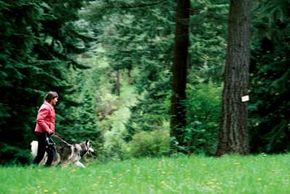
Don't let your pets romp in wooded areas. If you get a rash from poison ivy but can't remember being near the plant, you may have your pet to thank. If your dog or cat strolls through a patch of poison ivy, the oils may cling to the animal's fur. Pat or pick up the pet, and the oils rub off on you. The same is true of anything that comes in contact with oil from poisonous plants, including gardening tools, bicycle tires, and golf balls. Once there, the oil can remain active for a long time, so you can get poison ivy again and again without touching the plant itself if you don't use care when handling these outdoor items and rinse them off after each use.

Pets can sometimes give you a rash from poison ivy, oak, or sumac.

Pets can sometimes give you a rash from poison ivy, oak, or sumac.

Rinse your clothes outside. If you think you've had a close encounter with poison ivy, the oil may be all over your clothes. If you walk inside your home without rinsing your clothes, you may transfer the oil to rugs or furniture. Water deactivates the oil, so once your clothes are soaked, they're safe. It's also a good idea to rinse off camping, hunting, and fishing gear so you don't start off your next vacation with a case of poison ivy. Since poison plant oils don't just disappear, it's crucial to wash anything that has had contact with the victim or the oil, including clothing, boots, pets, other people, sleeping bags, fishing poles, walking sticks, etc. Use gloves when cleaning pets, people, and objects that may have had contact with the oil. Don't forget your shoes, which can pick up oils from twigs or vines. At night, if you take your shoes off by grabbing the sole or the heel, you may grab onto more than you bargained for and end up with a nasty case of poison ivy. 

Head for water fast. This should be your first step if you suspect you've gotten into poison ivy. Don't hesitate -- the sooner you're soaked, the better. Whether it comes from a stream, lake, garden hose, or faucet, if you can get to water within five to ten minutes after contact with the plant, you may be able to wash off the oil before all of it sinks in.

Carry rubbing alcohol with you. The oil from poison ivy isn't absorbed into the skin all at once; it sinks in fairly gradually. If you move quickly enough, you may be able to use rubbing alcohol to extract some oil from the skin. If you think you've been exposed to the weed and you're heading back inside for the day, wash down the exposed areas with rubbing alcohol and then rinse well with water. Don't use a cloth wipe, which may simply pick up the oil and transfer it somewhere else. And don't use the alcohol near your eyes.

Try a protectant. Consider using a product called IvyBlock, which is a protectant that helps diminish contact with urushiol. This can be applied before heading out into potential poison-plant territory.

If it's too late and you've already had a brush with poison ivy, oak, or sumac, don't worry. There are some simple and effective ways to treat the negative effects of poison ivy, oak and sumac with items found around the house. See the next page for some suggested home remedies.

For more information about allergies and skin ailments and how to treat them, try the following links:

This information is solely for informational purposes. IT IS NOT INTENDED TO PROVIDE MEDICAL ADVICE. Neither the Editors of Consumer Guide (R), Publications International, Ltd., the author nor publisher take responsibility for any possible consequences from any treatment, procedure, exercise, dietary modification, action or application of medication which results from reading or following the information contained in this information. The publication of this information does not constitute the practice of medicine, and this information does not replace the advice of your physician or other health care provider. Before undertaking any course of treatment, the reader must seek the advice of their physician or other health care provider.


Share This Article: (what's this?)


More Options:


ADVERTISEMENT
Browse Browse Videos Browse Videos
SYMPTOM CHECKER:
  Abdominal Bloating  Abdominal Fullness Prematurely Afte...  Abdominal Lumps  Abdominal Mass  Abdominal Pain  Abdominal Rigidity  Abdominal Sounds  Abdominal Swelling  Abnormal Posturing  Abnormal Tooth Shape  Abnormally Dark Or Light Skin  Absent Menstruation  Absent Thirst  Agitation  Ambiguous Genitalia  Ankle Pain  Appetite Decrease  Appetite Increase  Apraxia  Arachnodactyly  Armpit Lump  Autistic Behavior  Babinski's Reflex  Bed Wetting  Belching  Binge Eating  Blackheads  Bleeding Gums  Bleeding Into The Skin  Blindness  Blockage Of Leg Arteries  Blood In The Semen  Blood in Urine  Bloody Or Tarry Stools  Bone Pain Or Tenderness  Bounding Pulse  Bowel Incontinence  Breast Lump  Breast Pain  Breath Odor  Breath Sounds  Breathing - Slowed Or Stopped  Breathing Difficulty  Breathing Difficulty When Lying Dow...  Breathing That Sounds Abnormal  Broad Nasal Bridge  Bulging Fontanelles  Bullae  Chemosis  Chest Pain  Chills  Clammy Skin  Claw Foot  Claw Hand  Cloudy Cornea  Clubbing Of The Fingers Or Toes  Cold Intolerance  Coloboma Of The Iris  Comedones  Confusion  Constipation  Contracture Deformity  Coughing  Coughing Up Blood  Crying Excessively in Infants  Cyst  Decerebrate Posture  Decorticate Posture  Decreased Consciousness  Decreased Urine Output  Delayed Growth  Delayed or Absent Tooth Formation  Depression  Diarrhea  Difficulty with Urination  Dizziness  Drooling  Drowsiness  Dry Eyes  Dry Hair  Dry Skin  Ear Discharge  Earache  Earlobe Creases  Elbow Pain  Epicanthal Folds  Erection Problems  Erosion  Excessive Or Unwanted Hair In Women  Excessive Thirst  Excessive Urination  Excessive Urination at Night  Excessively Large Fontanelles  Eye Burning, Itching and Discharge  Eye Pain  Eye Redness  Eye Slant  Eyelid Drooping  Eyes That Bulge  Face Pain  Facial Paralysis  Facial Swelling  Fainting  Fatigue  Female Sexual Dysfunction  Fever  Finger Pain  Fingers That Change Color  Flank Pain  Floating Stools  Focal Neurological Deficits  Foot Pain  Foot, Leg, And Ankle Swelling  Foul Smelling Stools  Frequent Or Urgent Urination  Frontal Bossing  Gas (Flatulence)  Gastrointestinal Bleeding  Genital Sores (Female)  Genital Sores (Male)  Groin Lumps  Groin Pain  Gynecomastia  Hair Loss  Hallucinations  Hand Or Foot Spasms  Hand Tremors  Headache  Hearing Loss  Heart Murmurs And Other Sounds  Heart Palpitations  Heartburn  Heat Intolerance  Heavy, Prolonged, or Irregular Mens...  Heel Pain  Hemolytic Crisis  Hepatomegaly  Heterochromia  Hiccups  Hip Pain  Hoarseness Or Changing Voice  Hump Behind The Shoulders  Hyperactivity  Hyperelastic Skin  Hypermobile Joints  Hyperventilation  Hypotonia  Impaired Smell  Increased Head Circumference  Indigestion  Infantile Reflexes  Intercostal Retractions  Intertrigo  Irritability  Itching  Jaundice (Yellow Skin)  Joint Pain  Joint Swelling  Knee Pain  Leg Pain  Lichenified  Limited Range Of Motion  Lordosis  Low Nasal Bridge  Lower Back Pain  Macule  Malaise  Memory Loss  Metopic Ridge  Microcephaly  Micrognathia  Morbid Obesity  Morning Sickness  Moro Reflex  Motormental Retardation  Mouth Sores  Muscle Aches  Muscle Atrophy  Muscle Cramps  Muscle Function Loss  Muscle Twitching  Nail Abnormalities  Nasal Congestion  Nasal Discharge  Nasal Flaring  Natal Teeth  Nausea And Vomiting  Neck Lumps  Neck Pain  Night Blindness  Nightmares  Nikolsky’s Sign  Nipple Discharge  Nodules  Nosebleed  Numbness And Tingling  Obesity  Opisthotonos  Pain During Sexual Intercourse  Painful Menstrual Periods  Painful Urination  Pale or Clay-Colored Stools  Paleness  Papule  Patches  Patchy Skin Color  Pectus Carinatum  Pectus Excavatum  Penis Pain  Photophobia  Pilonidal Dimple  Pinna Abnormalities And Low-set Ear...  Point Tenderness  Polydactyly  Polyhydramnios  Poor Feeding In Infants  Preauricular Tag Or Pit  Premenstrual Breast Tenderness and ...  Prognathism  Pupils That Are Different Sizes  Purpura  Pustules  Rapid Shallow Breathing  Rash in a Child Under 2 Years  Rashes  Rib Cage Pain  Ridged Sutures  Scales  Scrotal Swelling  Seizures  Sensorineural Deafness  Separated Sutures  Shin Splints  Short Philtrum  Short Stature  Shoulder Pain  Simian Crease  Skeletal Limb Abnormalities  Skin Blushing/flushing  Skin Discoloration  Skin Lumps  Skin Turgor  Sleeping Difficulty  Sneezing  Snoring  Sore Throat  Spasticity  Speech Impairment (adult)  Splenomegaly  Splinter Hemorrhages  Strange Behavior  Stress And Anxiety  Striae  Subcutaneous Emphysema  Sunburn  Sunken Fontanelles  Supernumerary Nipples  Swallowing Difficulty  Swallowing Pain Or Burning  Sweating  Sweating Decrease  Swelling  Swollen Glands  Swollen Gums  Taste Impairment  Telangiectasia  Tenesmus  Testicle Lump  Testicle Pain  Tinnitus  Tongue Problems  Tooth Discoloration  Toothaches  Ulcers  Uncontrollable Eye Movements  Uncontrollable Movement  Uncontrolled Or Slow Movement  Uncoordinated Movement  Unpredictable Or Jerky Movement  Urinary Incontinence  Urine Discoloration  Vaginal Bleeding Between Periods  Vaginal Bleeding In Pregnancy  Vaginal Discharge  Vaginal Itching  Vesicles  Vision Problems  Vomiting Blood  Walking Abnormalities  Watery Eyes  Weak or Absent Pulse  Weakness  Webbing Of The Fingers Or Toes  Weight Gain  Weight Loss  Wheezing  White Spots in the Pupil  Whitehead  Widely Spaced Teeth  Wrinkles  Wrist Pain  Yawning