by Donald Patten

Cite This!
Please copy/paste the following text to properly cite this How Stuff Works article:

Patten, Donald.  "How to Care for Your Ears."  24 July 2006.  HowStuffWorks.com. <http://health.howstuffworks.com/how-to-care-for-your-ears.htm>  19 July 2008.
Health Videos
Health Videos

Ear Infections

Middle-ear infection (known medically as otitis media) is the most common illness in babies and young children. Researchers estimate that at least 75 percent (and possibly more than 90 percent) of children experience at least one such infection during the first three years of life, and close to 50 percent get three or more ear infections during those early years.

Researchers estimate that at least 75 percent  of children experience at least one ear infection.

Researchers estimate that at least 75
percent of children experience at
least one ear infection during
 the first three years of life.

Of course, children aren't the only ones who get ear infections. But they are, by far, the most common victims. Adults are more likely to get an infection of the outer ear, which is aptly referred to as "swimmer's ear" because it usually gets its start when water containing bacteria or fungi seeps into the ear and gets trapped in the ear canal.

In order to understand how middle-ear infections develop, it helps to know how healthy ears function. The outer ear is connected to an air-containing space called the middle ear. The eardrum, a thin membrane, is stretched across the entrance to the space, and three tiny sound-conducting bones are suspended within it. The pressure within the middle-ear space is equalized with the atmosphere through a narrow tube called the eustachian tube. The eustachian tube opens into a space behind the nose where air or fluid may enter or escape. The air pressure in the middle ear is equalized more than one thousand times a day -- every time you swallow -- usually without you noticing it. The eustachian tube also carries fluid away from the middle ear.

When a cold or an allergy is present, the eustachian tube swells and air is absorbed by the lining of the middle ear, creating a partial vacuum. The eardrum then gets pulled inward, and fluid weeps from the lining of the middle ear. Bacteria or viruses from the nose and throat can travel up the eustachian tube and infect the stagnant, warm fluid in the middle ear, which provides a perfect environment for them to live and multiply. When this happens, an infection is underway.

Children may be more prone to middle-ear infections for a variety of reasons. For example, their eustachian tubes are shorter and straighter than those in adults, which may make it easier for bacteria and viruses to penetrate. Children get colds and sore throats more often than adults. And the immune system is not as fully developed during childhood as it is in adulthood.

Preventing Ear Infections

Steer your child clear. Since middle-ear infections generally start with a cold or other upper respiratory infection, you'll help protect your child from ear infections by keeping him or her away from other kids who have infections. Making sure that any nasal allergies that your child has are well controlled can also be beneficial. And if you are in the process of choosing a day-care facility for your child, check into the center's policy for dealing with children who are ill.

Teach proper nose-blowing technique. Once your child is old enough, teach him or her to blow his or her nose softly rather than with excessive force, so as not to drive infection into the ears. And teach your child not to stifle a sneeze by pinching the nostrils, since this, too, may force the infection up into the ears.

Don't smoke. Here's another reason not to smoke: Children who live with smokers seem to be more susceptible to middle-ear infections than are those who live in smokefree homes. Cigarette smoke irritates the linings of the nasal passages and middle-ear cavity, which in turn interferes with the normal functioning of the eustachian tube. If you cannot quit, at least take your habit outside.

Be careful with bottle-feeding. Avoid giving a bottle of milk or formula to a baby who is lying on his or her back, because the nutrient-rich liquid can flow into the eustachian tube during swallowing and pool there, creating a luxurious breeding ground for infectious organisms.

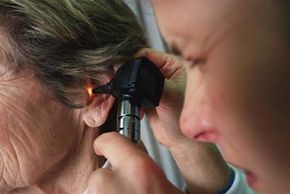
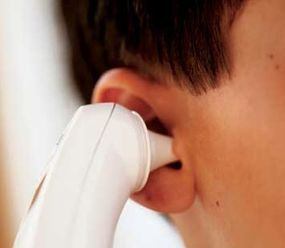
Stay alert to the signs. It is essential to get your child to the doctor as soon as you suspect an ear infection, but to do that, you need to be aware of the symptoms that can signal an ear infection. An older child who has an ear infection may complain of ear pain or aching or a stuffiness in the ear. In a younger child who cannot yet describe an earache, you need to be alert to other signs that may signal an imminent ear infection, such as pulling on or rubbing the ear, any trouble with hearing or balance, crying more than usual, or fluid draining from the ear. (Signs that an infection has taken hold include fever, crying, rubbing the ear, nausea, and vomiting.)

Treating an Ear Infection

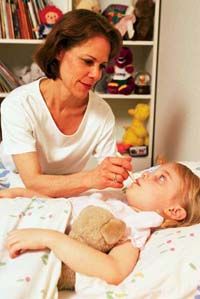
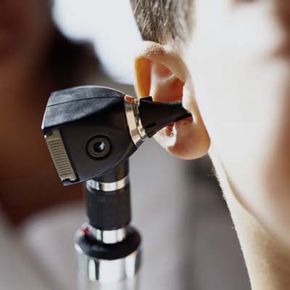
If you suspect your child has an ear infection, you should take the child to the doctor at once. If a middle-ear infection is treated promptly, it is not serious. If not treated right away, your child might suffer hearing loss and, as a result, a delay in learning and speech development. Once your child has seen the doctor, however, there are some things you can do to help make your little one more comfortable.

Follow through on the doctor's instructions. Your job doesn't end with a visit to the doctor. You will need to be sure that your child receives any medication prescribed by the doctor. Be sure, too, that you understand and follow the directions for administering the medicine (call your doctor or pharmacist with any questions). If an antibiotic has been prescribed, it's especially important that your child take the medication for the full time prescribed.

75 percent of children experience at least one ear infection

It is important that you follow all of your doctor's instructions to
ensure that your child's ear infection is completely gone.

Keep your child's chin up. If your child is lying down, prop his or her head up on pillows. Elevating the head will help keep the eustachian tubes draining into the back of the throat.

Try mild heat. Applying a heating pad set on warm -- not hot -- to the affected ear may make your child more comfortable.

Give acetaminophen. Try giving your child acetaminophen to help relieve pain and fever. Do not, however, give your child aspirin. Aspirin use in children with a viral illness has been associated with Reye's syndrome, an often fatal condition characterized by severe, sudden deterioration of liver and brain function. For a list of precautions to take when using over-the-counter analgesics, click here.

We've covered most of the ear difficulties you will encounter, but there are more serious problems, such as deafness or tinnitus. Turn to the next section for an examination of other ear disorders.

This information is solely for informational purposes. IT IS NOT INTENDED TO PROVIDE MEDICAL ADVICE. Neither the Editors of Consumer Guide (R), Publications International, Ltd., the author nor publisher take responsibility for any possible consequences from any treatment, procedure, exercise, dietary modification, action or application of medication which results from reading or following the information contained in this information. The publication of this information does not constitute the practice of medicine, and this information does not replace the advice of your physician or other health care provider. Before undertaking any course of treatment, the reader must seek the advice of their physician or other health care provider.

Symptom Checker:

  Abdominal Bloating   Abdominal Fullness Prematurely Afte...   Abdominal Lumps   Abdominal Mass   Abdominal Pain   Abdominal Rigidity   Abdominal Sounds   Abdominal Swelling   Abnormal Posturing   Abnormal Tooth Shape   Abnormally Dark Or Light Skin   Absent Menstruation   Absent Thirst   Agitation   Ambiguous Genitalia   Ankle Pain   Appetite Decrease   Appetite Increase   Apraxia   Arachnodactyly   Armpit Lump   Autistic Behavior   Babinski's Reflex   Bed Wetting   Belching   Binge Eating   Blackheads   Bleeding Gums   Bleeding Into The Skin   Blindness   Blockage Of Leg Arteries   Blood In The Semen   Blood in Urine   Bloody Or Tarry Stools   Bone Pain Or Tenderness   Bounding Pulse   Bowel Incontinence   Breast Lump   Breast Pain   Breath Odor   Breath Sounds   Breathing - Slowed Or Stopped   Breathing Difficulty   Breathing Difficulty When Lying Dow...   Breathing That Sounds Abnormal   Broad Nasal Bridge   Bulging Fontanelles   Bullae   Chemosis   Chest Pain   Chills   Clammy Skin   Claw Foot   Claw Hand   Cloudy Cornea   Clubbing Of The Fingers Or Toes   Cold Intolerance   Coloboma Of The Iris   Comedones   Confusion   Constipation   Contracture Deformity   Coughing   Coughing Up Blood   Crying Excessively in Infants   Cyst   Decerebrate Posture   Decorticate Posture   Decreased Consciousness   Decreased Urine Output   Delayed Growth   Delayed or Absent Tooth Formation   Depression   Diarrhea   Difficulty with Urination   Dizziness   Drooling   Drowsiness   Dry Eyes   Dry Hair   Dry Skin   Ear Discharge   Earache   Earlobe Creases   Elbow Pain   Epicanthal Folds   Erection Problems   Erosion   Excessive Or Unwanted Hair In Women   Excessive Thirst   Excessive Urination   Excessive Urination at Night   Excessively Large Fontanelles   Eye Burning, Itching and Discharge   Eye Pain   Eye Redness   Eye Slant   Eyelid Drooping   Eyes That Bulge   Face Pain   Facial Paralysis   Facial Swelling   Fainting   Fatigue   Female Sexual Dysfunction   Fever   Finger Pain   Fingers That Change Color   Flank Pain   Floating Stools   Focal Neurological Deficits   Foot Pain   Foot, Leg, And Ankle Swelling   Foul Smelling Stools   Frequent Or Urgent Urination   Frontal Bossing   Gas (Flatulence)   Gastrointestinal Bleeding   Genital Sores (Female)   Genital Sores (Male)   Groin Lumps   Groin Pain   Gynecomastia   Hair Loss   Hallucinations   Hand Or Foot Spasms   Hand Tremors   Hearing Loss   Heart Murmurs And Other Sounds   Heart Palpitations   Heartburn   Heat Intolerance   Heavy, Prolonged, or Irregular Mens...   Heel Pain   Hemolytic Crisis   Hepatomegaly   Heterochromia   Hiccups   Hip Pain   Hoarseness Or Changing Voice   Hump Behind The Shoulders   Hyperactivity   Hyperelastic Skin   Hypermobile Joints   Hyperventilation   Hypotonia   Impaired Smell   Increased Head Circumference   Indigestion   Infantile Reflexes   Insect Bites And Stings   Intercostal Retractions   Intertrigo   Irritability   Itching   Jaundice (Yellow Skin)   Joint Pain   Joint Swelling   Knee Pain   Leg Pain   Lichenified   Limited Range Of Motion   Lordosis   Low Nasal Bridge   Lower Back Pain   Macule   Malaise   Memory Loss   Metopic Ridge   Microcephaly   Micrognathia   Morbid Obesity   Morning Sickness   Moro Reflex   Motormental Retardation   Mouth Sores   Muscle Aches   Muscle Atrophy   Muscle Cramps   Muscle Function Loss   Muscle Twitching   Nail Abnormalities   Nasal Congestion   Nasal Discharge   Nasal Flaring   Natal Teeth   Nausea And Vomiting   Neck Lumps   Neck Pain   Night Blindness   Nightmares   Nikolsky’s Sign   Nipple Discharge   Nodules   Nosebleed   Numbness And Tingling   Obesity   Opisthotonos   Pain During Sexual Intercourse   Painful Menstrual Periods   Painful Urination   Pale or Clay-Colored Stools   Paleness   Papule   Patches   Patchy Skin Color   Pectus Carinatum   Pectus Excavatum   Penis Pain   Photophobia   Pilonidal Dimple   Pinna Abnormalities And Low-set Ear...   Point Tenderness   Polydactyly   Polyhydramnios   Poor Feeding In Infants   Preauricular Tag Or Pit   Premenstrual Breast Tenderness and ...   Prognathism   Pupils That Are Different Sizes   Purpura   Pustules   Rapid Shallow Breathing   Rash in a Child Under 2 Years   Rashes   Rib Cage Pain   Ridged Sutures   Scales   Scrotal Swelling   Seizures   Sensorineural Deafness   Separated Sutures   Shin Splints   Short Philtrum   Short Stature   Shoulder Pain   Simian Crease   Skeletal Limb Abnormalities   Skin Blushing/flushing   Skin Discoloration   Skin Lumps   Skin Turgor   Sleeping Difficulty   Sneezing   Snoring   Sore Throat   Spasticity   Speech Impairment (adult)   Splenomegaly   Splinter Hemorrhages   Strange Behavior   Stress And Anxiety   Striae   Subcutaneous Emphysema   Sunburn   Sunken Fontanelles   Supernumerary Nipples   Swallowing Difficulty   Swallowing Pain Or Burning   Sweating   Sweating Decrease   Swelling   Swollen Glands   Swollen Gums   Taste Impairment   Telangiectasia   Tenesmus   Testicle Lump   Testicle Pain   Tinnitus   Tongue Problems   Tooth Discoloration   Toothaches   Ulcers   Uncontrollable Eye Movements   Uncontrollable Movement   Uncontrolled Or Slow Movement   Uncoordinated Movement   Unpredictable Or Jerky Movement   Urinary Incontinence   Urine Discoloration   Vaginal Bleeding Between Periods   Vaginal Bleeding In Pregnancy   Vaginal Discharge   Vaginal Itching   Vesicles   Vision Problems   Vomiting Blood   Walking Abnormalities   Watery Eyes   Weak or Absent Pulse   Weakness   Webbing Of The Fingers Or Toes   Weight Gain   Weight Loss   Wheezing   White Spots in the Pupil   Whitehead   Widely Spaced Teeth   Wrinkles   Wrist Pain   Yawning

Diseases and Conditions Glossary:

  ABO Incompatibility   AIDS   ARDS (acute Respiratory Distress Sy...   Aarskog Syndrome   Aase Syndrome   Abdominal Aortic Aneurysm   Abortion - Complete   Abortion - Elective Or Therapeutic   Abortion - Incomplete   Abortion - Infected   Abortion - Threatened   Abscess   Acanthosis Nigricans   Achalasia   Achilles Tendinitis   Achondrogenesis   Achondroplasia   Acidosis   Acne   Acoustic Neuroma   Acoustic Trauma   Acquired Platelet Function Defect   Acrodermatitis   Acrodysostosis   Acromegaly   Actinic Keratosis   Actinomycosis   Acute Adrenal Crisis   Acute Arterial Occlusion - Kidney   Acute Bilateral Obstructive Uropath...   Acute Bronchitis   Acute Cerebellar Ataxia   Acute Cholecystitis (Gallstones)   Acute Cytomegalovirus (CMV) Infecti...   Acute Gouty Arthritis   Acute HIV Infection   Acute Interstitial Nephritis Not NS...   Acute Kidney Failure   Acute Lymphocytic Leukemia (ALL)   Acute Lymphocytic Leukemia In-Depth   Acute Mountain Sickness   Acute Myeloid Leukemia   Acute Nephritic Syndrome   Acute Pancreatitis   Acute Tubular Necrosis   Acute Unilateral Obstructive Uropat...   Acute Upper Airway Obstruction   Addison’s Disease   Adenomyosis   Adhesion   Adjustment Disorder   Adolescent Depression   Adolescent Pregnancy   Adrenocortical Carcinoma   Adrenoleukodystrophy   Adult Still's Disease   Agammaglobulinemia   Age-related Hearing Loss   Agoraphobia   Agranulocytosis   Aicardi Syndrome   Albinism   Alcohol Withdrawal   Alcoholic Cardiomyopathy   Alcoholic Ketoacidosis   Alcoholic Liver Disease   Alcoholic Neuropathy   Alcoholism   Alcoholism In-Depth   Alkalosis   Alkaptonuria   Allergic Conjunctivitis   Allergic Rhinitis   Allergic Rhinitis In-Depth   Allergic Vasculitis   Allergies   Allergy To Mold - Dander - Dust   Alopecia Areata   Alpha-1 Antitrypsin Deficiency   Alport Syndrome   Alström Syndrome   Alveolar Abnormalities   Alzheimer’s - Resources   Alzheimer’s Disease   Alzheimer's Disease Epidemic?   Alzheimer's Disease In-Depth   Amaurosis Fugax   Amblyopia   Amebiasis   Amebic Liver Abscess   Amelogenesis Imperfecta   Amenorrhea   Amniotic Constriction Bands   Amphetamine Or Sympathomimetic Into...   Amyotrophic Lateral Sclerosis   Anal Fissure   Analgesic Nephropathy   Anaphylaxis   Anaplastic Thyroid Cancer   Androgen Insensitivity Syndrome   Anemia   Anemia - B12 Deficiency   Anemia In-Depth   Anemia Of Chronic Disease   Anencephaly   Aneurysm   Aneurysm In The Brain   Angina   Angiodysplasia Of The Colon   Angioedema   Ankylosing Spondylitis   Annular Pancreas   Anorchia   Anorectal Abscess   Anorexia Nervosa   Anthrax   Antisocial Personality Disorder   Anxiety Disorders In-Depth   Aortic Arch Syndrome   Aortic Dissection   Aortic Insufficiency   Aortic Stenosis   Apert Syndrome   Apnea Of Prematurity   Apoplexy   Appendicitis   Arrhenoblastoma of the Ovary   Arrhythmias   Arterial Embolism   Arterial Insufficiency   Arteriosclerosis Of The Extremities   Arteriovenous Malformation - Cerebr...   Arthritis   Arthritis - Resources   Asbestos-related Pleural Effusion   Asbestosis   Ascariasis   Ascites   Aseptic Meningitis   Aseptic Necrosis   Asherman Syndrome   Asperger Syndrome   Aspergillosis   Aspiration Pneumonia   Asthma   Asthma And Allergy - Resources   Asthma In Adults In-Depth   Asthma In Children And Adolescents ...   Astigmatism   Asymptomatic Bacteriuria   Asymptomatic HIV Infection   Ataxia-telangiectasia   Atelectasis   Atheroembolic Renal Disease   Atherosclerosis   Athlete's Foot   Atrial Fibrillation/flutter   Atrial Myxoma   Atrial Septal Defect   Atrophic Vaginitis   Attention Deficit Hyperactivity Dis...   Attention-deficit Hyperactivity Dis...   Atypical Mycobacterial Infection   Atypical Pneumonia   Aural Polyps   Autism   Autism - Resources   Autoerythrocyte Sensitivity   Autoimmune Disorders   Autoimmune Hepatitis   Autonomic Hyperreflexia   Autonomic Neuropathy   Avian Influenza   Avoidant Personality Disorder   Axillary Nerve Dysfunction   Back Pain And Sciatica In-Depth   Back Strain Treatment   Backaches And Stress   Bacterial Gastroenteritis   Baker’s Cyst   Balanitis   Barbiturate Intoxication And Overdo...   Barrett’s Esophagus   Bartholin’s Abscess   Bartter Syndrome   Basal Cell Carcinoma   Basal Cell Nevus Syndrome   Basal Ganglia Dysfunction   Bassen-Kornzweig Syndrome   Bathing Trunk Nevus   Becker's Muscular Dystrophy   Beckwith-Wiedemann Syndrome   Bedwetting   Bell's Palsy   Benign Ear Cyst Or Tumor   Benign Positional Vertigo   Benign Prostatic Hyperplasia In-Dep...   Beriberi   Bezoar   Bilateral Hydronephrosis   Bile Duct Obstruction   Biliary Atresia   Biliary Stricture   Bipolar Disorder   Bipolar Disorder In-Depth   Birth-acquired Herpes   Birthmarks - Pigmented   Birthmarks - Red   Bladder Cancer   Bladder Outlet Obstruction   Bladder Stones   Blastomycosis   Blastomycosis Skin Lesion   Bleeding Disorders   Bleeding Esophageal Varices   Blepharitis   Blind Loop Syndrome   Blocked Tear Duct   Blood Clots   Blount's Disease   Body Lice   Bone Tumors   Borderline Personality Disorder   Botulism   Bowlegs   Brachial Palsy In Newborns   Brachial Plexopathy   Brain Abscess   Brain Herniation   Brain Tumor - Adults   Brain Tumor - Children   Brain Tumors - Primary In-Depth   Branchial Cleft Cyst   Breast Cancer   Breast Cancer In-Depth   Breast Infection   Breast Milk Jaundice   Breath Holding Spell   Brief Reactive Psychosis   Bronchial Adenoma   Bronchiectasis   Bronchiolitis   Bronchitis   Bronchopulmonary Dysplasia   Brucellosis   Bruxism   Bulimia   Bullous Pemphigoid   Bunions   Burkitt Lymphoma   Bursitis   Byssinosis   CMV - Gastroenteritis/colitis   CMV - Immunocompromised Host   CMV - Pneumonia   CMV Esophagitis   CMV Retinitis   CSF Leak   Campylobacter Enteritis   Canavan Disease   Cancer   Cancer - Penis   Cancer - Renal Pelvis Or Ureter   Cancer - Resources   Cancer - Throat Or Larynx   Cancer - Vulva   Candida Esophagitis   Canker Sore Treatment   Canker Sores   Caplan Syndrome   Caput Succedaneum   Carbunculosis   Carcinoid Syndrome   Cardiac Amyloidosis   Cardiac Tamponade   Cardiogenic Shock   Cardiomyopathy   Carpal Tunnel Syndrome   Carpal Tunnel Syndrome In-Depth   Cat Scratch Disease   Cataract   Cataracts In-Depth   Catheter-associated UTI   Cavernous Sinus Thromb