How do so many celebrities stay super skinny? Undoubtedly, many of them do it the old fashioned way, by sticking to strict diets and exercise programs. But at least a few have acquired their tight thighs, flat tummies and quarter-bouncing buns in a plastic surgeon's office, even if they're reluctant to admit it.


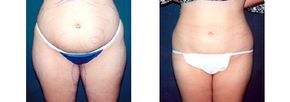
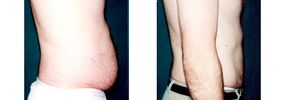
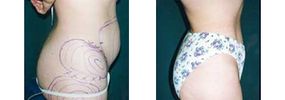
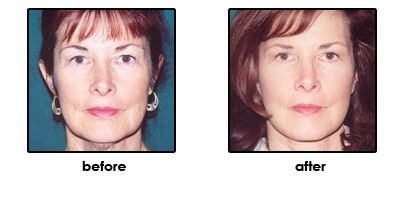
Photo courtesy The Santa Barbara Plastic Surgery Center, Dr. David L. Buchanan
Liposuction "before and after" photo

Celebrities aren't the only ones getting a sleeker look with surgery. Doctors perform an estimated 500,000 liposuction procedures in the United States each year, making it the most popular type of cosmetic surgery, according to the American Society for Dermatologic Surgery.

In this article, we'll find out how liposuction is performed, learn what it's like to have the procedure done and find out what risks are involved.

Thank You
Thanks to Scott Bernstein, MD, for his assistance with this article.

Most people know that liposuction involves removing fat from certain parts of the body to create a more streamlined shape. But how exactly does it work?


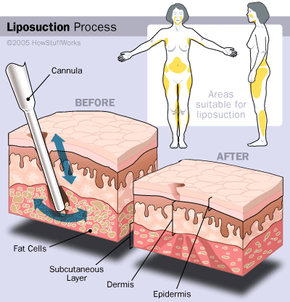
Fat cells are located in the subcutaneous layer of the skin.

First, what is fat? It is tissue (otherwise known as adipose tissue) made up of cells that store energy and insulate the body. Fat is generally subcutaneous -- located underneath the skin. Where fat is deposited around the body depends on a person's gender. In men, fat tends to congregate in the chest, abdomen and buttocks. In women, it generally gathers in the breasts, hips, waist and buttocks.

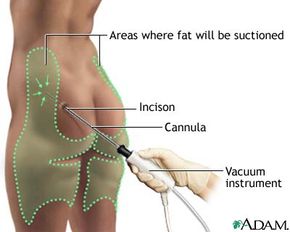
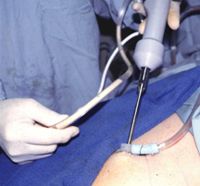
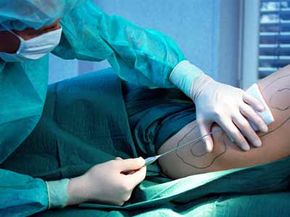
There are two layers of subcutaneous fat: deep and superficial. During a liposuction procedure (also known as lipoplasty or suction lipectomy), the doctor makes a tiny incision and inserts a hollow, stainless-steel tube (called a cannula) into the deep fat layer. Working on this layer is safer than working on the superficial layer, because there is less risk of injuring the skin. In a typical procedure, the doctor pushes and pulls the tube through the fat layer (a new technique, power liposuction, automates the movement). As the cannula moves, it breaks up fat cells, and a vacuum pump or syringe removes the fat with suction.


Liposuction is most often used for cosmetic purposes, to give a smoother shape to areas such as the thighs, abdomen, buttocks, hips, thighs, calves, arms or back -- areas that haven't responded to diet and exercise. It can also be used to reduce the size of male "breasts" or to remove fat tumors (lipomas, or abnormal fatty deposits). Fat can be removed from more than one part of the body during a single surgical procedure.

It's important to note that liposuction is not a weight-loss technique; it is merely a reshaping technique. Only diet and exercise can result in real weight loss.

Liposuction Doctors
Liposuction is not its own medical specialty, and no specialized training is required, which means that any licensed physician, including plastic surgeons and dermatologists, can perform it. The Food & Drug Administration recommends that you ask your doctor whether he or she is specially trained to perform liposuction. It's also a good idea to ask how many procedures the doctor has performed. And don't be swayed by ads promising amazing results -- if they sound too good to be true, they probably are.

Who are the Best Candidates for Liposuction?
Having a lot of excess fat doesn't necessarily make you a good candidate for liposuction. In fact, the opposite is true. People of normal weight and in generally good shape who have a few trouble spots make the best candidates, because their skin is firm and elastic. If the skin is not elastic enough, it will remain baggy after the procedure. For this reason, older patients may not see the same type of results as younger patients. You also need to be in good shape physically to do well during the surgery.

Anyone who has diabetes mellitus, a heart condition, poor circulation, an infection, past history of bleeding or a coagulation disorder (such as thrombophilia) should check with their primary care physician before undergoing liposuction. Liposuction is also not recommended for people who are on medication that interferes with blood clotting (blood thinners such as aspirin, warfarin and heparin).

  Next: Liposuction Surgery

Cost
One of the most important considerations regarding liposuction is cost. That varies based on the areas worked on, the amount of fat removed, the state and the doctor performing the procedure. The average cost for liposuction in one body part ranges from $2,000 to $7,000. Adding another area of the body increases the cost by about $1,200 to $4,000 [ref]. Additional fees include lab tests, anesthesia and the garments worn after the procedure. Because liposuction is considered cosmetic surgery, it is generally not covered by health insurance. But when it is performed for medical reasons (for example, to remove lipomas), some insurance companies will cover the cost.