
Where the Air Goes
As you breathe air in through your nose or mouth, it goes past the epiglottis and into the trachea. It continues down the trachea through your vocal cords in the larynx until it reaches the bronchi. From the bronchi, air passes into each lung. The air then follows narrower and narrower bronchioles until it reaches the alveoli.
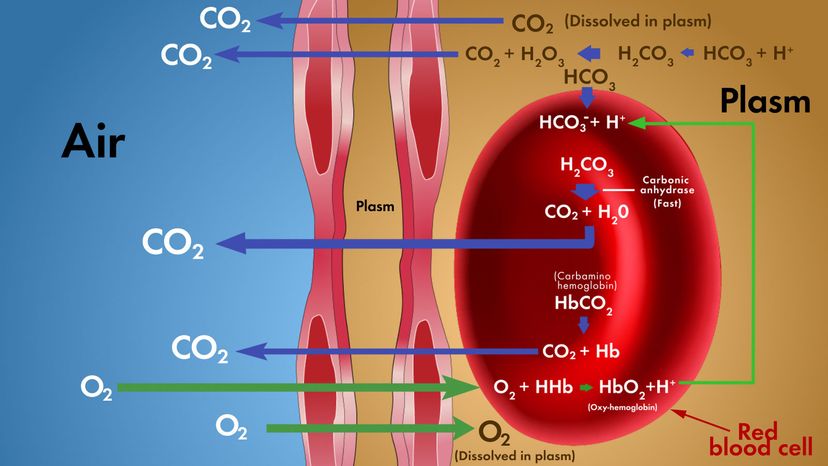
Within each air sac, the oxygen concentration is high, so oxygen passes or diffuses across the alveolar membrane into the pulmonary capillary. At the beginning of the pulmonary capillary, the hemoglobin in the red blood cells has carbon dioxide bound to it and very little oxygen (see illustration above). The oxygen binds to hemoglobin and the carbon dioxide is released. Carbon dioxide is also released from sodium bicarbonate dissolved in the blood of the pulmonary capillary. The concentration of carbon dioxide is high in the pulmonary capillary, so carbon dioxide leaves the blood and passes across the alveolar membrane into the air sac. This exchange of gases occurs rapidly (fractions of a second). The carbon dioxide then leaves the alveolus when you exhale and the oxygen-enriched blood returns to the heart. Thus, the purpose of breathing is to keep the oxygen concentration high and the carbon dioxide concentration low in the alveoli so this gas exchange can occur!
Advertisement
Anatomy of the Lung
- alveolus - tiny, thin-walled air sac at the end of the bronchiole branches where gas exchange occurs (plural - alveoli).
- bronchioles - numerous small tubes that branch from each bronchus into the lungs. They get smaller and smaller.
- bronchus - a branch of the trachea that goes from the trachea into the lung (plural - bronchi)
- diaphragm - muscle at the base of the chest cavity that contracts and relaxes during breathing
- epiglottis - a flap of tissue that closes over the trachea when you swallow so that food does not enter your airway
- intercostal muscles - muscles along the rib cage that assist in breathing
- larynx - voice box where the vocal cords are located.
- nasal cavity - chamber in from the nose where air is moistened and warmed
- pleural membranes - thin, membranes that cover the lungs, separate them from other organs and form a fluid-filled chest cavity.
- pulmonary capillaries - small blood vessels that surround each alveolus
- trachea -rigid tube that connects the mouth with the bronchi (windpipe)