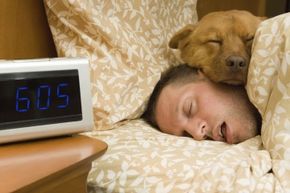
It's rumored that W.C. Fields once said the best cure for insomnia is to get a lot of sleep. Easier said than done, at least for the 40 percent of Americans who are sleep deprived [source: Gallup]. And in those sleep-deprived states, they spend a lot of money on sleep-inducing drugs, as much as $3.9 billion -- and that doesn't count all the other products and services tried in an effort to catch a few zzzs. Americans spend about $24 billion on everything from teas that are sure to bring the sandman to the door to room-darkening curtains and the elusive perfect pillow (or pillows, plural -- on average, we all use two). Once upon a time, Ovaltine (yes, the milk flavoring) was marketed as an insomnia cure. It's not, but that didn't stop the sleepy from giving it a try.
The act of sleeping has long been a mystery to us. Why do we do it, and why do we need it? And what would happen if we spent all that time awake instead? Imagine all the things you'd get accomplished if you didn't sleep. In the early 1950s, research began to confirm that sleep is important, and that while we sleep our bodies are anything but passive. And, further, that when we're deprived of our sleep, bad things happen.
Advertisement
Adults need, on average, between seven and nine hours of sleep every night, but the reality is that many of us aren't getting a good night's sleep. Most adults only average about six and a half hours of sleep a night during the week. We're just a little lazier on the weekends (sleeping an average of an additional 52 minutes on Saturdays and Sundays) [source: American Sleep Research Institute].
Sleep deprivation can be a result of a sleep disorder, and as many as some 70 million of us live with insomnia, sleep apnea, periodic limb movement disorder (PLMD) or another of the more than 70 recognized sleep disorders that steal away our 40 winks. Late hours at work, working the night shift, pets in the bed, kids, a partner's snoring and even pain or acid reflux may also leave you fatigued. Suffer from a mood disorder? Depression and sleep deprivation are known bedfellows.
No matter which reason is to blame, all of this sleep deprivation puts us at risk for both short- and long-term problems, affecting our health, mood, memory, cognitive abilities and reaction time.
Advertisement