
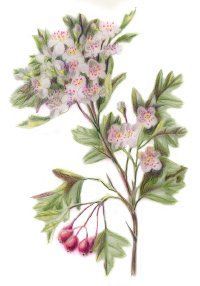
Like many members of the rose family, the hawthorn bears lovely, fragrant flowers; brightly pigmented fall berries, high in vitamin C; and a few thorns. The hawthorn has been a cherished plant for centuries and is mentioned in many of the old European herbals. A popular ornamental and landscaping plant, this beautiful tree flowers in May; thus, it is sometimes called the mayflower. The pilgrims who traversed the Atlantic centuries ago may have named their ship the Mayflower after the prosperous hawthorn tree.
Reverence for the hawthorn in Europe is an ancient tradition. The ancient European druids included the hawthorn with the sacred oak and the ash in a trio of trees with special powers. Europeans often left offerings of food at the base of hawthorn trees for the fairies, or little folk. Superstitions of harm coming to those who chopped down or pruned a hawthorn prevented many from tampering with the sacred tree in any way. Many people would not even bring the spring flowers inside, lest they upset the little folk.
Advertisement
Uses of Hawthorn
Hawthorn is an important botanical cardiotonic (capable of producing and restoring the normal tone of the heart). Medications are made from the flowers and especially the berries of the hawthorn tree. Hawthorn's many chemical constituents include the flavonoids -- anthocyanidins and proanthocyanidins -- which reduce blood vessel sensitivity to and damage from oxidizing agents. Various chemicals in our environment -- pollutants, smoke, and chemicals in food -- can bind to and damage the lining of blood vessels. Hawthorn improves the integrity of veins and arteries, enhancing circulation and nutrition to the heart, thus improving the function of the heart muscle itself. This action makes it useful for cases of angina (chest pain), atherosclerosis (a buildup of fat on the inside of artery walls), weakness and enlargement of the heart, high and low blood pressure, and elevated cholesterol levels.
Hawthorn also may help control arrhythmias and palpitations. Early American Eclectic physicians suggested using hawthorn for valvular problems of the heart, especially when accompanied by a fast heart rate and nervousness. Modern herbalists continue to use hawthorn for such complaints.
Keep reading to learn about warnings and preparation tips for hawthorn, including a recipe for hawthorn jam and syrup.
To learn more about treating common medical conditions at home, try the following links:
- For an overview of all of our herbal remedies, go to the main Herbal Remedies page.
- To learn more about treating medical conditions at home, visit our main Home Remedies page.
- One of the best things you can do for your health and well being is to make sure you are getting enough of the vital nutrients your body needs. Visit our Vitamins page to learn more.
This information is solely for informational purposes. IT IS NOT INTENDED TO PROVIDE MEDICAL ADVICE. Neither the Editors of Consumer Guide (R), Publications International, Ltd., the author nor publisher take responsibility for any possible consequences from any treatment, procedure, exercise, dietary modification, action or application of medication which results from reading or following the information contained in this information. The publication of this information does not constitute the practice of medicine, and this information does not replace the advice of your physician or other health care provider. Before undertaking any course of treatment, the reader must seek the advice of their physician or other health care provider.Before engaging in any complementary medical technique, including the use of natural or herbal remedies, you should be aware that many of these techniques have not been evaluated in scientific studies. Use of these remedies in connection with over the counter or prescription medications can cause severe adverse reactions. Often, only limited information is available about their safety and effectiveness. Each state and each discipline has its own rules about whether practitioners are required to be professionally licensed. If you plan to visit a practitioner, it is recommended that you choose one who is licensed by a recognized national organization and who abides by the organization's standards. It is always best to speak with your primary health care provider before starting any new therapeutic technique.
Advertisement