
Kidney Filtration
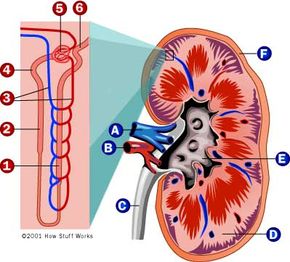
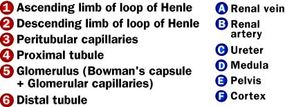
In the nephron, approximately 20 percent of the blood gets filtered under pressure through the walls of the glomerular capillaries and Bowman's capsule. The filtrate is composed of water, ions (sodium, potassium, chloride), glucose and small proteins (less than 30,000 daltons -- a dalton is a unit of molecular weight). The rate of filtration is approximately 125 ml/min or 45 gallons (180 liters) each day. Considering that you have 7 to 8 liters of blood in your body, this means that your entire blood volume gets filtered approximately 20 to 25 times each day! Also, the amount of any substance that gets filtered is the product of the concentration of that substance in the blood and the rate of filtration. So the higher the concentration, the greater the amount filtered or the greater the filtration rate, the more substance gets filtered.
This filtration process is much like the making of espresso or cappuccino. In a cappuccino machine, water is forced under pressure through a fine sieve containing ground coffee; the filtrate is the brewed coffee. The arrangement of the glomerular capillaries in series with the peritubular capillaries is important to maintain a constant pressure in the glomerular capillaries, and thus a constant rate of filtration, despite momentary fluctuations in blood pressure. Once the filtrate has entered the Bowman's capsule, it flows through the lumen of the nephron into the proximal tubule.
Advertisement