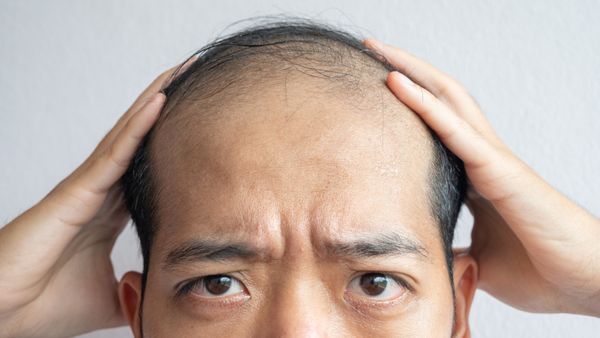
Have you ever wondered why so many men remove their facial hair every day? Flashpop / Getty Images
I don't know about you, but every morning I shave. It's a ritual -- shower, comb hair, shave, brush teeth, dress.
Showering is easy to understand. If you don't shower, you start to stink. Combing the hair is easy to understand too, because it would be a mess if you didn't comb it. If you don't brush your teeth, they rot and fall out. And dressing, obviously, is a necessity.
Advertisement
But why is it that, for a majority of men, all facial hair must be removed? There certainly isn't any health reason to shave it off. Why would we spend the time and money to go through this ritual each and every day?
And what about the technology of shaving? A number of companies in the United States and around the world make billions of dollars off of the simple act of shaving. These companies release new products constantly. Is all of this technology really necessary?
In this article, we will look at the social phenomenon of shaving. Then we'll learn about the evolution of shaving technology, starting with the straight razor and advancing through today's multi-bladed technology and electric razors.
For most of human history, men have had beards. And it is easy to understand why. Cave men had beards because they had no choice -- they lacked any kind of blade to shave their beards off.
Advertisement
Many religions also have prohibitions against shaving. For example, in Leviticus 19:27, the Bible contains a specific prohibition against shaving your beard and the hair on the sides of your head. Some orthodox religions still practice this today.
Once metallurgy has been refined in any civilization, however, the technology of knives and scissors follows soon after. These cutting tools become more and more refined, and these refinements lead to the development of the razor -- the sharpest knife possible. With a very sharp knife, it is possible to begin shaving.
Even with these developments, however, men preferred beards. This may be because shaving with a straight razor is a somewhat dangerous activity better left to a professional. Unless you live in a city and are wealthy, being able to find and afford a shaving professional is difficult. And so, all the way up to the 20th century, beards were fashionable and most men wore them.
But during World War I in the United States, that all changed. And there were two reasons for that change:
Gillette had released the "safety razor" in 1901, and it was steadily gaining popularity because of a massive ad campaign. The safety razor made it possible and inexpensive for men to shave daily.
Soldiers in the United States army were required to shave.
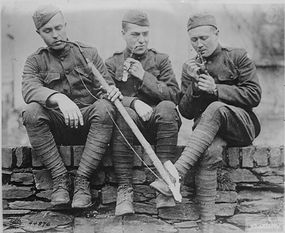
Soldiers shaved out of necessity during World War I, but millions of American and European men soon followed suit.
Image courtesy George Grantham Bain Collection/ Library of Congress Prints and Photographs Division
Certainly one reason for shaving during WWI is the fact that it was the first war to see chemical agents used on the battlefield. Soldiers had to use gas masks for the first time. In order for a gas mask to fit properly, you need to be clean-shaven. The army bought millions of Gillette razors and blades to make shaving possible.
When all of the soldiers returned from WWI with their clean-shaven faces, they were heroes. They appeared in their home towns, and they also appeared in newsreels in the new movie theaters that had sprung up everywhere. Combined with ad campaigns from companies like Gillette, it became the fashion to be clean shaven. Between 1920 and 1960, beards were definitely unfashionable. That taboo has eased somewhat since the 60s, but it is still far more common for men to shave than not. And as you can see, it is strictly a fashion statement, and largely the result of advertising by companies like Schick, Norelco and Gillette.
Or, to put it another way, no one makes any money if you have a beard...
Advertisement
The Straight Razor
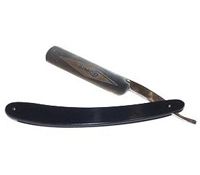
Straight razor
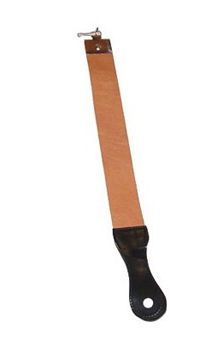
Leather strop
All images courtesy Amazon
In order to shave, you need a sharp knife of some sort to do the shaving. Although you can use an ordinary knife to do the job (see, for example, the movies Tarzan and Dances with Wolves, among others), the best knife for the job is a straight razor.
(See How Sword Making Works for many more details on the metallurgy and technique of making fine blades.)
Advertisement
If you have ever watched an old movie or cartoon that features a straight razor, you have probably seen the sharpening stone, and you have certainly seen the leather strop used to hone the blade to razor sharpness. Sharpening a straight razor is actually a fine art, as you can see if you look through these sharpening instructions.
A blade goes from sharp to dull because the sharp edge wears away. Atoms of metal at the keen edge of the blade chip off. The sharpening stone recreates the wedge shape at the tip of the blade. You actually abrade the metal with the stone to bring the edge of the blade to an atom-slicing point. By pushing the edge of the blade into the stone, the stone can carve away the metal and create a sharp wedge.
However, the stone will leave a bit of microscopic roughness on the sharp edge of the blade. You take this roughness out by using the strop. Here you run the blade on the leather in the opposite direction that you used on the stone. The idea is to align the microserrations on the edge of the blade and bring the blade to maximum microscopic sharpness.
Doing all this honing and stropping is an art, and it takes a lot of time. Creating a smooth, razor-sharp edge is not easy. Add to this the fact that using this long, exceedingly sharp razor blade on your skin is inherently dangerous. If all you have is a straight razor, it is no wonder that people preferred to let their beards grow.
The development of the safety razor changed all of that. We'll talk about it next.
Advertisement
Gillette's Safety Razor
Gillette's safety razor
Image courtesy U.S. Patent Office
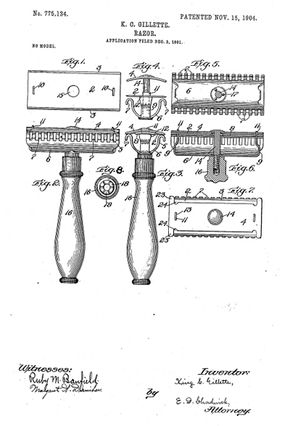
In order to make shaving safe, comfortable and easy, someone would have to completely re-conceptualize the shaving tool. That someone turned out to be a man named King Gillette.
Gillette's idea was brilliant in its simplicity. His goal was to create a small, inexpensive metal blade that would be sharpened in a factory and then thrown away when it became dull. In Patent number 775134, Gillette put it this way:
Advertisement
A main object of my invention is to provide a safety-razor in which the necessity of honing and stropping the blade is done away with. By doing this, Gillette would accomplish three goals:
He would completely eliminate the tedium and "art" of manual sharpening, making the act of shaving much simpler.
He would replace the inherently dangerous straight razor with the "safety razor" -- a device where injury is nearly impossible.
He would create one of the greatest business models ever devised. Millions of people would be shaving, and these people would be using one of Gillette's blades every week. If Gillette made a little money off of each blade, he would become fabulously wealthy.
Turn the page to see how Gillette made these goals a reality.
Advertisement
Safety Razor Design
The hardest part of Gillette's plan was sharpening the blade in a factory. Gillette's idea was to take thin, rolled steel, stamp it into small, rectangular shapes and then sharpen the edges. That seems simple enough today, but at the time it had never been done. There were two separate problems that had to be solved:
Hardening the steel so that it would hold a sharp edge. Heating steel to about 2,000 degrees F and then cooling it off hardens it. The thin metal in Gillette's blades had a tendency to warp because it would cool quickly and unevenly.
Actually sharpening the edge of such a thin, small piece of metal.
Both of these problems turned out to be much more difficult than anticipated. In fact, it took Gillette six years of trying before he and an engineer named William Nickerson got the process worked out. The heating problem was originally solved by sandwiching the blades between thicker pieces of slower-cooling metal during the heating and cooling process. The second problem was solved by increasing levels of automation. The first razor blades produced by Gillette were sharpened almost completely by hand. Eventually, automation dropped the cost of each blade down to a penny, while they sold for about a dime each.
Advertisement
The rest, as they say, is history. When Proctor and Gamble bought Gillette in 2005, it paid more than $50 billion for the company.
Advertisement
Schick's Electric Razor
A modern Norelco razor
Image courtesy Amazon
Gillette introduced his shaving system in 1901. By the end of WWI in 1919, the act of shaving had been completely transformed in the United States. Beards were out and the clean-shaven look was nearly required of all men.
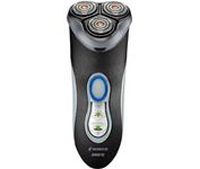
Then, in 1928, the act of shaving was re-conceptualized again by a man named Jacob Schick. Schick got his start in the shaving business by inventing a system for loading a razor with a new blade without ever touching the blade (the forerunner of "injector" razors). But Schick's ultimate goal was to eliminate the shaving cream and water altogether and create a dry shaving system. To do this, Schick invented the electric razor.
Advertisement
Schick's first problem was a creative one -- he had to "see" shaving in a completely different way. Up until the time Schick invented his shaver, shaving had always been done with a blade that slices. The blade has to be sharp enough to slice off the hair in the same way that a knife slices through a stick of butter. Schick's electric razor, on the other hand, would use the same concept behind a pair of scissors. The hair is actually sheered off.
Advertisement
Electric Razor Design
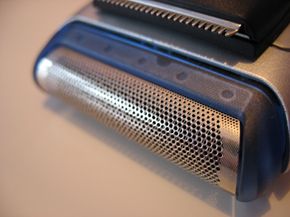
Closeup of the foil of an electric razor.
So how did Schick develop his electric razor design? If you actually try to shave with a pair of scissors, you quickly realize that it can not work (even with the tiniest pair of manicuring scissors). You are not able to get close enough to the skin with scissors. This is Schick's second area of innovation. In an electric razor, an incredibly thin, perforated piece of metal called the foil is what actually touches the skin. The hairs poke through the perforations in the metal and then are sliced off by a blade on the other side of the foil. The blades in an electric razor can either oscillate back and forth (as in Schick's original design) or they can spin (as in the Norelco design).
Having re-conceptualized the idea of shaving, Schick faced another problem. Electric motors in the 1920s had not yet been miniaturized to the point where they could fit in a hand-held device. Schick's first design had the motor (about the size of a grapefruit) in one case. It then connected to the shaving head with a flexible drive shaft. Looking back on it today, this design seems completely ridiculous. But there really was no other way to do it given the motors available at the time.
Advertisement
However, motors were shrinking and all Schick had to do was wait. In 1931 he released his first handheld electric shaver, complete with a small internal motor.
Advertisement
Twin Blades and Beyond
Learn about shaving technology.
For 40 years, shaving technology stayed about the same. Sure, electric razors got a bit more sophisticated (and much more popular, thanks to men's apparently in-born love of electric gadgets and the appearance of electric razors in many popular movies). The injector razor made wet shaving a little safer.
Then, in the 1970s, wet shaving advanced again with the creation of the twin-blade cartridge. The idea had been around for awhile, but the revolution that occurred in the 70s happened from a marketing standpoint. Gillette put its full weight behind the twin-blade concept with a huge advertising blitz, and Schick then went head-to-head with Gillette. Everyone was taught that two blades were better than one through billions of dollars spent on advertising.
Advertisement
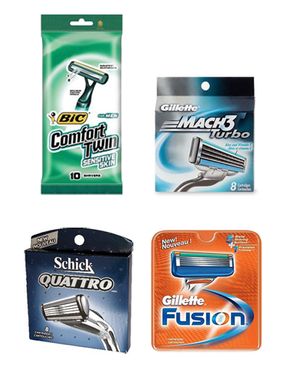
Development on the triple-blade razor began in the 1970s, but apparently there were problems with three blades. They caused irritation. In 1998 the solution to this problem appeared. The Mach 3 shaving system from Gillette uses three blades, but the blades are very small and each one is canted at a slightly different angle in the cartridge. The addition of lubricating strips, a flow-through blade design and other innovations made this the system to beat.
Schick rose to the challenge by introducing the Quattro, a four-blade shaving system. And Gillette rose to that challenge with the Gillette Fusion, at five blades. It would seem that this would mark the logical extreme in the evolution of multi-blade designs. Surely, if you can't get a close shave with 5 blades, the incremental improvement on a sixth blade is not going to help you much.
For shaving to advance from here, someone will have to re-conceptualize again. Perhaps everyone will turn to laser hair removal and solve the problem completely? Who knows.
Advertisement
Shaving Products
Classic shaving technology.
Courtesy Amazon
Before leaving the topic of shaving, we should say something about lather and shaving products. Wet shaving would be much more difficult if it weren't for some kind of lather to lubricate the whole process.
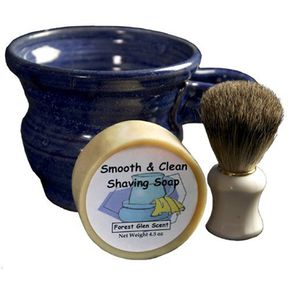
Originally (and still today for many people) the lubricant was soap. You can use plain old bathroom soap applied to the skin with your hand. But the tradition of the old shaving mug, with a bar of shaving soap at the bottom, is much more common. The soap is applied with a special shaving brush with bristles made of badger hair. Yes, badger hair.
Advertisement
According to How to get that perfect shave, the mug and brush are the only way to go when applying lather for a shave. But if you watch football, baseball and basketball on TV, you are led to believe otherwise. The commercials on these shows bombard men with the message that shaving cream in an aerosol can is the only way to go. We'll leave that debate for another time. But let's talk about shaving cream for one moment.
Shaving Cream
Image courtesy Brandon Blinkenberg, Stock.xchng
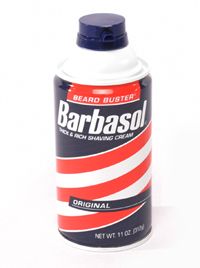
Have you ever looked at shaving cream after it comes out of the can? This is lather. The foam is almost structural in its density and strength. Kids love playing with it because it is very nearly moldable, like a very lightweight foamed plastic. It is nothing like the lather than you get from soap. So where does this kind of foam come from?
You can read all about the aerosol can in How Aerosol Cans Work. But neither the can nor the delivery system is the reason why this foam is so cool. The foam is made by the chemicals in the can.
Advertisement
According to How Products Are Made, all shaving creams contain the same basic ingredients:
A standard recipe contains approximately 8.2 percent stearic acid, 3.7 percent triethanolamine, 5 percent lanolin, 2 percent glycerin, 6 percent polyoxyethylene sorbitan monostearate, and 79.6 percent water. Two major ingredients in this formula are common in many of today's preparations. Stearic acid is one of the main ingredients in soap making, and triethanolamine is a surfactant, or surface-acting agent, which does the job of soap, albeit much better. While one end of a surfactant molecule attracts dirt and grease, the other end attracts water. Lanolin and polyoxyethylene sorbitan monostearate are both emulsifiers which hold water to the skin, while glycerin, a solvent and an emollient, renders skin softer and more supple.
The combination of the glycerine, lanoline, Stearic acid and triethanolamine gives shaving cream its extra-creamy and dense lather. That combined with the propellant (often butane or propane) expands and instantly evaporates when it leaves the can, filling the foam with its millions of bubbles.
Shaving is obviously a big deal, and billions of people do it every morning. To learn lots more about shaving, check out the links on the next page.
Roberts, Charles. "Wet Shaving Systematics: A Primer on the Roberts Method of Wet Shaving (RMWS)." 2006. http://www.enchanteonline.com/pages/faqs/primerfinal.pdf