
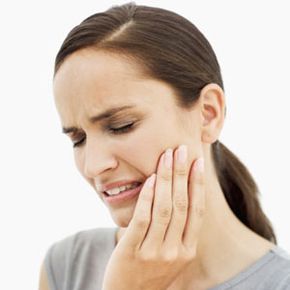
"For there was never yet philosopher that could endure the toothache patiently." Shakespeare was right. The toothache isn't easy to endure. The good news: With improved dental care and regular checkups, the excruciating pain of a toothache is not as common as it once was. But when pain does occur in the mouth, it's an important signal that you should not ignore -- even if it goes away on its own.
Tooth pain is varied. Perhaps most common is the minor pain caused by sensitive teeth. You eat or drink something hot, cold, or sweet and feel a momentary twinge. Some people suffer achy teeth because of sinus problems; that's probably the case if you notice that the pain is limited to your upper teeth and that several teeth are affected at one time.
Advertisement
Bruxism (or teeth grinding) or a problem with your temporomandibular joint may be the cause of toothaches or sensitivity. And, recent dental work can cause a tooth to be sensitive to temperature changes for a few weeks.
Some types of pain deserve immediate attention from your dentist, however. If you feel a sharp pain when you bite down, for instance, you may have a cavity, a loose filling, a cracked tooth, or damaged pulp (that's the inner core of the tooth that contains the blood vessels and nerves). Pain that sticks around for more than 30 minutes after eating hot or cold foods can also indicate pulp damage, either from a deep cavity or a blow to the tooth. And the stereotypical toothache with constant and severe pain, swelling, and sensitivity is definitely a sign of trouble.
As a rule of thumb, if a tooth hurts enough to wake you up at night or interferes with your ability to function normally during the day, it's time to dial up the dentist. You could have an abscessed tooth; that means the pulp of the tooth has died, resulting in an infection that can spread to the gum and even to the bone.
Pain associated with the pulp of the tooth is kind of tricky. It can let you know that damage has occurred. But nerves in the pulp can die rapidly -- in as little as 12 hours, after which the pain fades. However, soon the tooth hurts again as the dead tissue becomes infected, or abscessed.
That's why putting off dental attention for a toothache can mean bad news. But if it's 3:00 in the morning or the middle of Sunday afternoon, you can take the temporary measures that follow to deal with the pain until you can get to the dentist's office.
Take two aspirin...or acetaminophen or ibuprofen -- the same over-the-counter pills you take for everyday aches and pains. Ibuprofen may be the best choice, since it relieves the inflammation that may accompany a toothache. See this list of precautions to take when using over-the-counter analgesics.
For a more natural approach, see pain-relieving remedies on the next page.
This information is solely for informational purposes. IT IS NOT INTENDED TO PROVIDE MEDICAL ADVICE. Neither the Editors of Consumer Guide (R), Publications International, Ltd., the author nor publisher take responsibility for any possible consequences from any treatment, procedure, exercise, dietary modification, action or application of medication which results from reading or following the information contained in this information. The publication of this information does not constitute the practice of medicine, and this information does not replace the advice of your physician or other health care provider. Before undertaking any course of treatment, the reader must seek the advice of their physician or other health care provider.
The brand name products mentioned in this publication are trademarks or service marks of their respective companies. The mention of any product in this publication does not constitute an endorsement by the respective proprietors of Publications International, Ltd. or HowStuffWorks.com, nor does it constitute an endorsement by any of these companies that their products should be used in the manner described in this publication.
Advertisement