What is Vitamin C?

by Jennifer Brett, N.D.

Cite This!
Please copy/paste the following text to properly cite this How Stuff Works article:

Brett, N.D., Jennifer.  "What is Vitamin C?."  03 January 2007.  HowStuffWorks.com. <http://recipes.howstuffworks.com/what-is-vitaminc.htm>  09 July 2008.
Food Videos
Food Videos

Vitamin C, or ascorbic acid, gets a lot of attention, and perhaps rightly so.  It is one of the more readily available vitamins for most people around the world, and between news reports of its benefits and advice from friends and family, its no wonder this particular citrus vitamin is always at the top of our supplement list.

When you hear the word vitamin C, you may instinctively think of the common cold. For that you can thank Linus Pauling and his 1970 book, Vitamin C and the Common Cold. In it, Pauling recommended megadoses of vitamin C to reduce the frequency and severity of colds. The book triggered a sales boom for vitamin C that is still going strong. It also prompted nutritionists to begin a series of carefully designed studies of the vitamin and its functions.

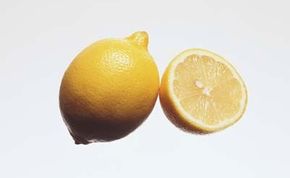
Vitamin C in citrus fruits like lemons and oranges provide a lot of the daily requirement of vitamin C.
©2007 Publications International, Ltd.
Citrus fruits like lemons and oranges provide a lot
 of the daily requirement of vitamin C.

Today, some people still swear by vitamin C. Researchers have found little proof of its effectiveness against catching the common cold, but there is evidence to suggest it can reduce the severity and length of a cold.

The story of vitamin C began centuries ago with accounts of a disease called scurvy. The ailment causes muscle weakness, lethargy, poor wound healing, and bleeding from the gums and under the skin. Scurvy was rampant around the world for centuries, and documents dating back before the time of Christ describe the disease. Ships' logs tell of its widespread occurrence among sailors in the 16th century.

History books report that scurvy was a common problem among the troops during the American Civil War. And records of Antarctic explorers recount how Captain Robert Scott and his team succumbed to the malady in 1912.

Almost as old as reports of the disease are reports of successful ways to treat it: green salads, fruits, vegetables, pickled cabbage, small onions, and an ale made of such things as wormwood, horseradish, and mustard seed. In the 1530s, French explorer Jacques Cartier told how the natives of Newfoundland cured the mysterious disease by giving his men an extract prepared from the green shoots of an evergreen tree, which the men then called the "arbor vitae" or tree of life .

However, the disease was still the "scourge of the navy" 200 years later, when the British physician James Lind singled out a cure for scurvy. Believing that acidic materials relieved symptoms of the illness, Lind tried six different substances on six groups of scurvy-stricken men. He gave them all the standard shipboard diet, but to one pair of men in each of the six groups he gave a different test substance. One pair received a solution of sulfuric acid each day; another, cider; and a third, sea water. The fourth pair received vinegar, and the fifth took a daily combination of garlic, mustard seed, balsam of Peru, and gum myrrh. The sixth pair in the experiment received two oranges and a lemon each day-lucky them.

Lind found that the men who ate citrus fruit improved rapidly; one returned to duty after only six days. The sailors who drank the cider showed slight improvement after two weeks, but none of the others improved.

Although Lind published the results of his experiment, 50 years passed before the British navy finally added lime juice to its sailors' diets. And it wasn't until 1932 that researchers isolated the vitamin itself. At the time, it carried the name hexuronic acid. Later, scientists renamed it ascorbic (meaning "without scurvy") acid.

Of course, scurvy isn't the only malady vitamin c protects against, and there are various functions of this particular vitamin.

Functions of Vitamin C

A major function of vitamin C is its role as a cofactor in the formation and repair of collagen -- the connective tissue that holds the body's cells and tissues together. Collagen is a primary component of blood vessels, skin, tendons, and ligaments. Vitamin C also promotes the normal development of bones and teeth. Furthermore, it's needed for amino acid metabolism and the synthesis of hormones, including the thyroid hormone that controls the rate of metabolism in the body. Vitamin C also aids the absorption of iron and calcium.

These days, vitamin C is heralded for its antioxidant status. It prevents other substances from combining with free oxygen radicals by tying up these free radicals of oxygen themselves. In this role, vitamin C protects a number of enzymes involved in functions ranging from cholesterol metabolism to immune function. It destroys harmful free radicals that damage cells and can lead to cancer, heart disease, cataracts, and perhaps even aging. Vitamin C rejuvenates its cousin antioxidant, vitamin E.

This all-around good-for-you vitamin is also a useful food additive in many processed foods. It's a natural preservative and prevents foods from discoloring. When added to cured meats, vitamin C inhibits the formation of nitrosamines -- compounds in the stomach known to cause cancer in laboratory animals.

For more information on Vitamin C, check out the links below:

  • Learn about the healing power of vitamin C by reading Benefits of Vitamin C.
  • If you're worried you're not getting enough Vitamin C in your diet, visit Vitamin C Deficiency.
  • Fortunately, Vitamin C is abundant in many food sources, to find out which are your best bets check out Foods That Contain Vitamin C.
  • If you're not fond of fruits and vegetables, but still want to make sure you're getting enough Vitamin C, read Vitamin C Supplements.
  • To learn about the many vitamins in our diet, how much you should be eating, and where to find them, go to our general Vitamins page.
  • To find the best prices on vitamin C supplements, click here.

ABOUT THE AUTHOR:

Jennifer Brett, N.D. is director of the Acupuncture Institute for the University of Bridgeport, where she also serves on the faculty for the College of Naturopathic Medicine. A recognized leader in her field with an extensive background in treating a wide variety of disorders utilizing nutritional and botanical remedies, Dr. Brett has appeared on WABC TV (NYC) and on Good Morning America to discuss utilizing herbs for health.

This information is solely for informational purposes. IT IS NOT INTENDED TO PROVIDE MEDICAL ADVICE. Neither the Editors of Consumer Guide (R), Publications International, Ltd., the author nor publisher take responsibility for any possible consequences from any treatment, procedure, exercise, dietary modification, action or application of medication which results from reading or following the information contained in this information. The publication of this information does not constitute the practice of medicine, and this information does not replace the advice of your physician or other health care provider. Before undertaking any course of treatment, the reader must seek the advice of their physician or other health care provider.

Nutrition Glossary:

  Aflatoxin   Age-appropriate Diet For Children   Alcohol And Diet   Balanced Diet   Breast Milk   Breast-feeding Mothers - Self-care   Breastfeeding   Breastfeeding Tips   Caffeine In The Diet   Calcium In Diet   Carbohydrates   Celiac Disease - Nutritional Consid...   Chloride In Diet   Cholesterol   Chromium In Diet   Cooking Utensils And Nutrition   Copper In Diet   Cow's Milk For Infants And Children   Cystic Fibrosis - Nutritional Consi...   Diabetes Diet   Diarrhea In Children - Diet   Diet - Calories   Diet - Cancer Treatment   Diet - Constipation   Diet - Liver Disease   Diet For People With Chronic Kidney...   Fast Foods   Fat   Fiber   Fluoride In Diet   Folic Acid (folate)   Food Additives   Food Guide Pyramid   Food Jags   Food Labeling   Food Poisoning Prevention   Food Safety   Genetically Engineered Foods   Heart Disease And Diet   Hyperactivity And Sugar   Inborn Errors Of Metabolism   Infant Formulas   Iodine In Diet   Iron In Diet   Irradiated Foods   Kidney Diet - Dialysis Patients   Lead - Nutritional Considerations   Magnesium In Diet   Niacin   Normal Growth And Development   Nutrition And Athletic Performance   Overcoming Breastfeeding Problems   Pantothenic Acid And Biotin   Pesticides   Phosphorus In Diet   Potassium In Diet   Protein In Diet   Riboflavin   School Lunch Programs   Selenium In Diet   Sodium In Diet   Soy   Sweeteners   Thiamine   Traveler’s Diarrhea Diet   Traveling With Children   Vegetarianism   Vitamin A   Vitamin B12   Vitamin B6   Vitamin C   Vitamin D   Vitamin E   Vitamin K   Vitamins   Vitamins In-Depth   Water In Diet   Weight Control And Diet In-Depth   Zinc In Diet