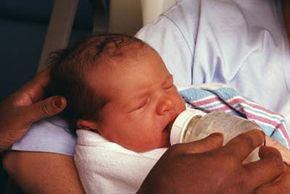
The decision to breastfeed or bottle-feed is yours to make. Since you are the one taking care of your baby, you must feel comfortable with the decision. Feeling you've been pressured into one or the other method only leads to discontent.
More and more mothers are deciding to breastfeed their new babies. In deciding if you will breastfeed, you must consider many facts. The more we learn about breast milk and its composition, the more we realize it is the perfect food for babies. Some research even suggests that breast milk improves a baby's intelligence and can protect a baby against certain forms of cancer. Besides the nutritional benefits, a special closeness often develops between mothers and their breast-fed babies. In this article, we will explore all aspects of breastfeeding, including:
Advertisement
- The Benefits of Breastfeeding The reason that breastfeeding has been such an entrenched method for feeding newborns is that there are some empirical benefits to the process. On this page, we will explain the benefits of breastfeeding so that you can decide if it would be right for you. First, there are the nutritional benefits to consider. Next, there are immunologic factors to consider. Many of the mother's immunities can get passed on to the baby through the breast milk. Finally, there is a benefit to the mother from breastfeeding.
- How to Breastfeed Breastfeeding might not come as naturally to some young mothers as they would have hoped. In fact, some women have a tremendous amount of trouble learning how to breastfeed. In this section, we will show you how to get the help you need to breastfeed successfully. We will also address the questions of when you should definitely not breastfeed and how long you should breastfeed. We will also explore the question of breastfeeding at work. Finally, we will look at when it is time to stop breastfeeding.
- Breastfeeding and Diet You might be surprised to learn that you will require more calories when you are breast feeding than you did while you were pregnant. There are many complications to your nutritional needs while you are breastfeeding that might surprise you. Also, whatever the mother takes into her body can be passed on to the baby through the breast milk. Naturally, the nursing mother will want to be just as vigilant about what she takes into her body during this time as she was when she was carrying the baby inside her. On this page, we will help you sort all your diet concerns while nursing.
- How to Bottle-Feed If you opt to bottle-feed for medical or personal reasons, we will offer you some helpful tips on this page. First, we will examine the various baby formulas that are available. With recent advancements, baby formulas are almost as fortified as breast milk. There are also soy-based formulas for babies with milk allergies and formulas with special additives for infants with health problems. Next we will discuss mixing and storing your formula. We will also look at the various bottles and nipples that are on the market. Finally, we will look at the correct way to bottle-feed your baby.
- Infant Feeding Schedules and Burping Whether or not you choose to breastfeed or bottle-feed your baby, you will eventually have to decide what schedule you will feed your baby on and know a thing or two about burping your baby. We will show you the two main strategies in feeding methods -- demand and schedule feedings. We will also teach you the correct way to burp your baby.
- Infant Feeding and Fathers An article on breast feeding would naturally focus on the mother, but fathers can play a vital role in feeding their baby. Fathers can bottle-feed a baby expressed milk and of course formula, but there are other ways a father can contribute. On this page, we will offer some advice to keep dads actively involved in feeding their child. There's no reason why a father has to miss out on the closeness that can develop while feeding a newborn baby.
This information is solely for informational purposes. IT IS NOT INTENDED TO PROVIDE MEDICAL ADVICE. Neither the Editors of Consumer Guide (R), Publications International, Ltd., the author nor publisher take responsibility for any possible consequences from any treatment, procedure, exercise, dietary modification, action or application of medication which results from reading or following the information contained in this information. The publication of this information does not constitute the practice of medicine, and this information does not replace the advice of your physician or other health care provider. Before undertaking any course of treatment, the reader must seek the advice of their physician or other health care provider.
Advertisement