Home Remedies for Treating Acne
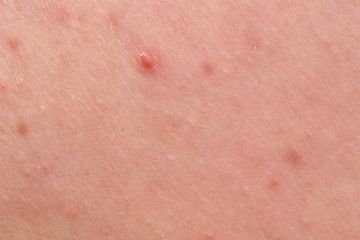
If your face has already broken out with pimples, the battle is not over. Your skin care after you have acne is just as important as the preventative measures you take, based on our home remedies.
Do For Acne? Children should be treated fairly young if they start showing signs of acne, especially if their parents suffered from severe acne. See a dermatologist if you:
|
Use benzoyl peroxide. A number of over-the-counter (OTC) products contain this ingredient, which helps break up the plug of dead skin cells, bacteria, and oil in pores and cuts down on the bacteria as well. Start with the lowest concentration -- a 2.5 percent or 5 percent lotion or gel once a day. After a week, increase to twice a day, morning and night, if it doesn't irritate your skin. If your acne doesn't improve within four to six weeks, use a 10 percent lotion or gel once a day and, if needed, twice a day. Work your way up gradually, especially if you have sensitive skin, because the higher the concentration, the more irritating it may be. If it dries your skin too much, apply a mild moisturizer as well (either at a different time of day or after applying the benzoyl peroxide).
Give one of the other OTC products a shot. Other acne products contain sulfur or resorcinol, which help unplug oil glands by irritating the skin. Most dermatologists, however, believe that benzoyl peroxide is the most effective anti-acne ingredient available without a prescription.
Apply that OTC product for prevention, too. Use acne medication not only on pimples that have already formed but also on acne-free areas that are prone to breakouts. That can include your entire face (avoiding the lips and eyes, however), back, and chest.
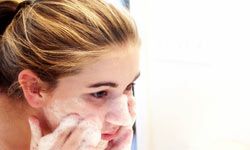
Go easy on your face. You can't wash away acne with hot water and a rough washcloth. Washing only removes oils from the skin's surface, not from within the plugged ducts. Adults can suffer from both acne and dry skin. In fact, if you're too aggressive in your quest for cleanliness, you may very well end up drying out or irritating the sensitive skin on your face.
Don't exfoliate your face. Exfoliating refers to removing the top layer of dead skin cells using a rough washcloth, loofah, or specially designed product. But skin with acne is already irritated, and scrubbing can make things worse. Don't use brushes, rough sponges or clothes, cleansers with granules or walnut hulls, or anything else of that nature on the delicate facial skin. For the back and chest, where skin is less sensitive, you can try one of the acne scrub pads along with soap that contains benzoyl peroxide.
Though just about everyone has had to battle acne at one time or another, an unsightly blemish can still make you want to hide your face from the public. Hopefully you now have a better understanding of where acne comes from, and the home remedies you can take to both treat and prevent it.
For more information about acne and how to combat it, try the following links:
- To see all of our home remedies and the conditions they treat, go to our main Home Remedies page.
- To see all of our herbal remedies, visit our main Herbal Remedies page.
- Oily skin is a major cause of acne. To fix this problem, go to Home Remedies for Oily Skin.
- On the other hand, if your skin if feeling dry and painful, check out our Home Remedies for Dry Skin.
- Stress can be another cause of acne outbreaks. Our Home Remedies for Stress can help keep your mind relaxed.
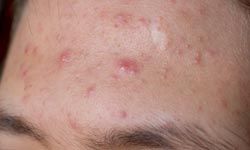
Acne rosacea is characterized by redness, inflammation (swelling), and dilated blood vessels. Further clues: You don't have any blackheads, the acne is located mainly on the central part of your face (your nose and cheeks), and you have a lot of pustules (pus-containing pimples). You're more likely to suffer from this type of acne if you're light-skinned. Acne rosacea can be treated with a medicated cream prescribed by a dermatologist. You should also avoid the sun, since sun exposure can worsen the condition. Certain foods, such as those that are spicy or hot in temperature, can also make rosacea worse. |
ABOUT THE AUTHORS:
Timothy Gower is a freelance writer and editor whose work has appeared in many publications, including Reader's Digest, Prevention, Men's Health, Better Homes and Gardens, The New York Times, and The Los Angeles Times. The author of four books, Gower is also a contributing editor for Health magazine.
Alice Lesch Kelly is a health writer based in Boston. Her work has been published in magazines such as Shape, Fit Pregnancy, Woman's Day, Reader's Digest, Eating Well, and Health. She is the co-author of three books on women's health.
Linnea Lundgren has more than 12 years experience researching, writing, and editing for newspapers and magazines. She is the author of four books, including Living Well With Allergies.
Michele Price Mann is a freelance writer who has written for such publications as Weight Watchers and Southern Living magazines. Formerly assistant health and fitness editor at Cooking Light magazine, her professional passion is learning and writing about health.
ABOUT THE CONSULTANTS:
Ivan Oransky, M.D., is the deputy editor of The Scientist. He is author or co-author of four books, including The Common Symptom Answer Guide, and has written for publications including the Boston Globe, The Lancet, and USA Today. He holds appointments as a clinical assistant professor of medicine and as adjunct professor of journalism at New York University.
David J. Hufford, Ph.D., is university professor and chair of the Medical Humanities Department at Pennsylvania State University's College of Medicine. He also is a professor in the departments of Neural and Behavioral Sciences and Family and Community Medicine. Dr. Hufford serves on the editorial boards of several journals, including Alternative Therapies in Health & Medicine and Explore.
This information is solely for informational purposes. IT IS NOT INTENDED TO PROVIDE MEDICAL ADVICE. Neither the Editors of Consumer Guide (R), Publications International, Ltd., the author nor publisher take responsibility for any possible consequences from any treatment, procedure, exercise, dietary modification, action or application of medication which results from reading or following the information contained in this information. The publication of this information does not constitute the practice of medicine, and this information does not replace the advice of your physician or other health care provider. Before undertaking any course of treatment, the reader must seek the advice of their physician or other health care provider.