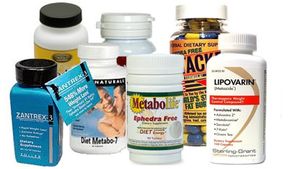
Their ads claim they can help you "feel more fit," "boost your energy" and "melt away the pounds." Who needs diet and exercise when a little pill can erase the weight quickly and easily? With more than 60 percent of Americans now considered overweight or obese, diet drugs have turned into a multibillion dollar industry in the United States.
But although diet pills promise a quick fix, can they deliver? Can they help you lose weight? And if so, can they help you keep it off? Weight-loss questions aside, several diet drugs over the last decade have been associated with serious heart problems and other health-related issues, and diet pills have even been linked to a number of deaths.
Advertisement
Diet drugs are available in several different forms, including prescription drugs, over-the-counter drugs and herbal supplements.
Prescription drugs such as Meridia and Xenical are only available with a doctor's prescription. They are carefully regulated by the Food and Drug Administration (FDA) Center for Drug Evaluation and Research, and their use is closely monitored by the prescribing doctor.
Over-the-counter drugs are available without a doctor's prescription, right in your local drugstore or supermarket, and are also regulated by the FDA. According to AnneCollins.com, "Products considered by FDA to be over-the-counter weight control drugs [as opposed to dietary supplements] are primarily those containing the active ingredient phenylpropanolamine (PPA)." In 2000, the FDA requested that drug manufacturers voluntary reformulate PPA-containing products in the wake of evidence that phenylpropanolamine can increase the risk of stroke, so there are few diet drugs on the market that still contain this ingredient. OTC drugs also fall under the jurisdiction of the FDA's Center for Drug Evaluation and Research.
Herbal diet supplements are also available without a prescription. You'll typically find a huge variety of these in health food and nutrition stores as well as in regular supermarkets. Herbal supplements are often labeled "all natural" and are considered by the FDA to be food products as opposed to drugs. As such, they fall under the jurisdiction of the FDA's Center for Food Safety and Applied Nutrition and are regulated differently from OTC drugs.
There is also a selection of diet aids that are administered by patch, as a powder or in liquid form. These types of drugs may fall into any of the above categories -- it is only the delivery method that is unique.
In this article, we will look at the wide variety of diet pills available, find out how they work and what their side effects are and see if they live up to their promises.
Advertisement